Lisbon, Portugal
Our arrival in Lisbon means two things: it's Day 143 and we are on the 8th and final segment of our World Cruise.

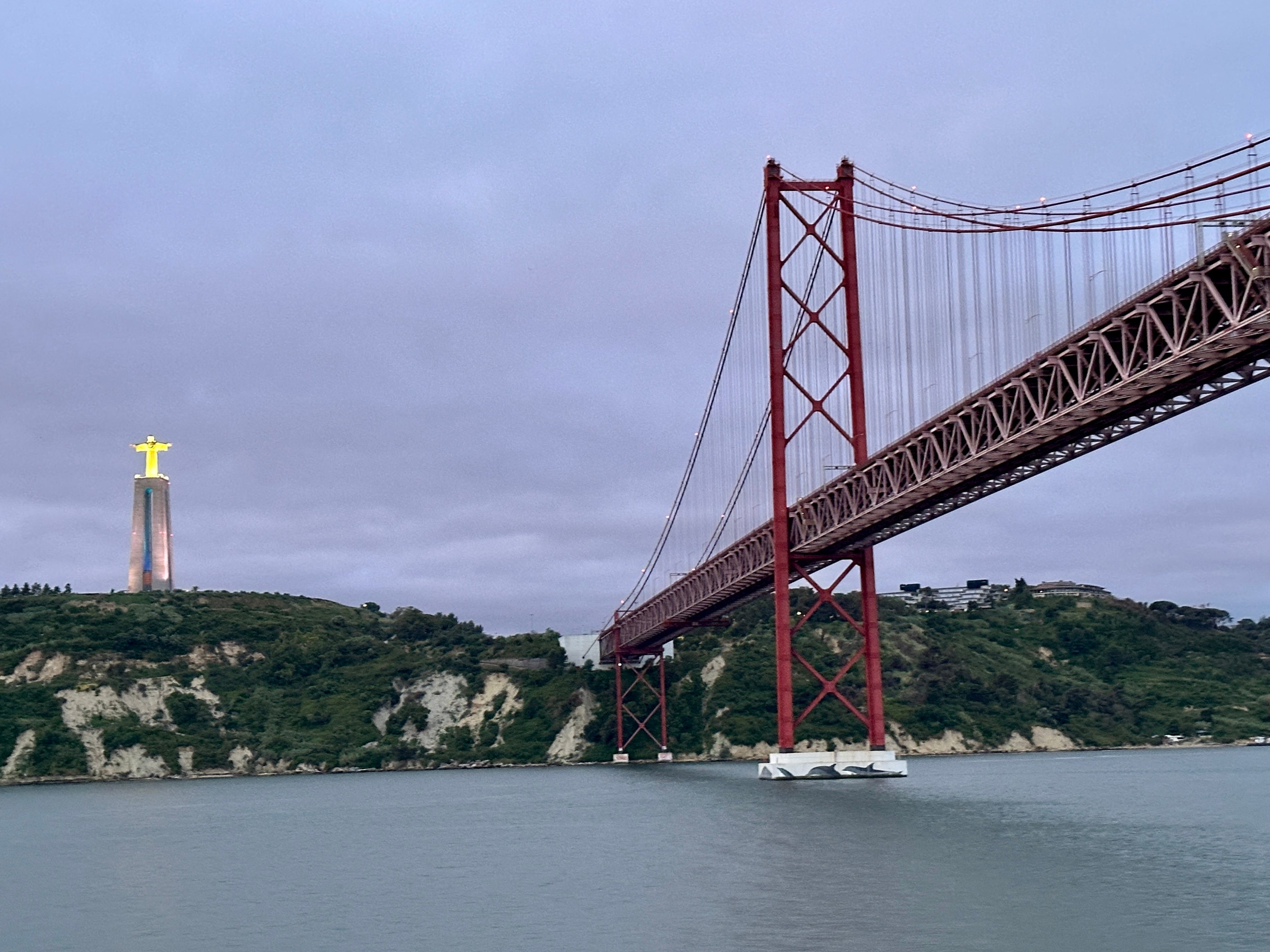
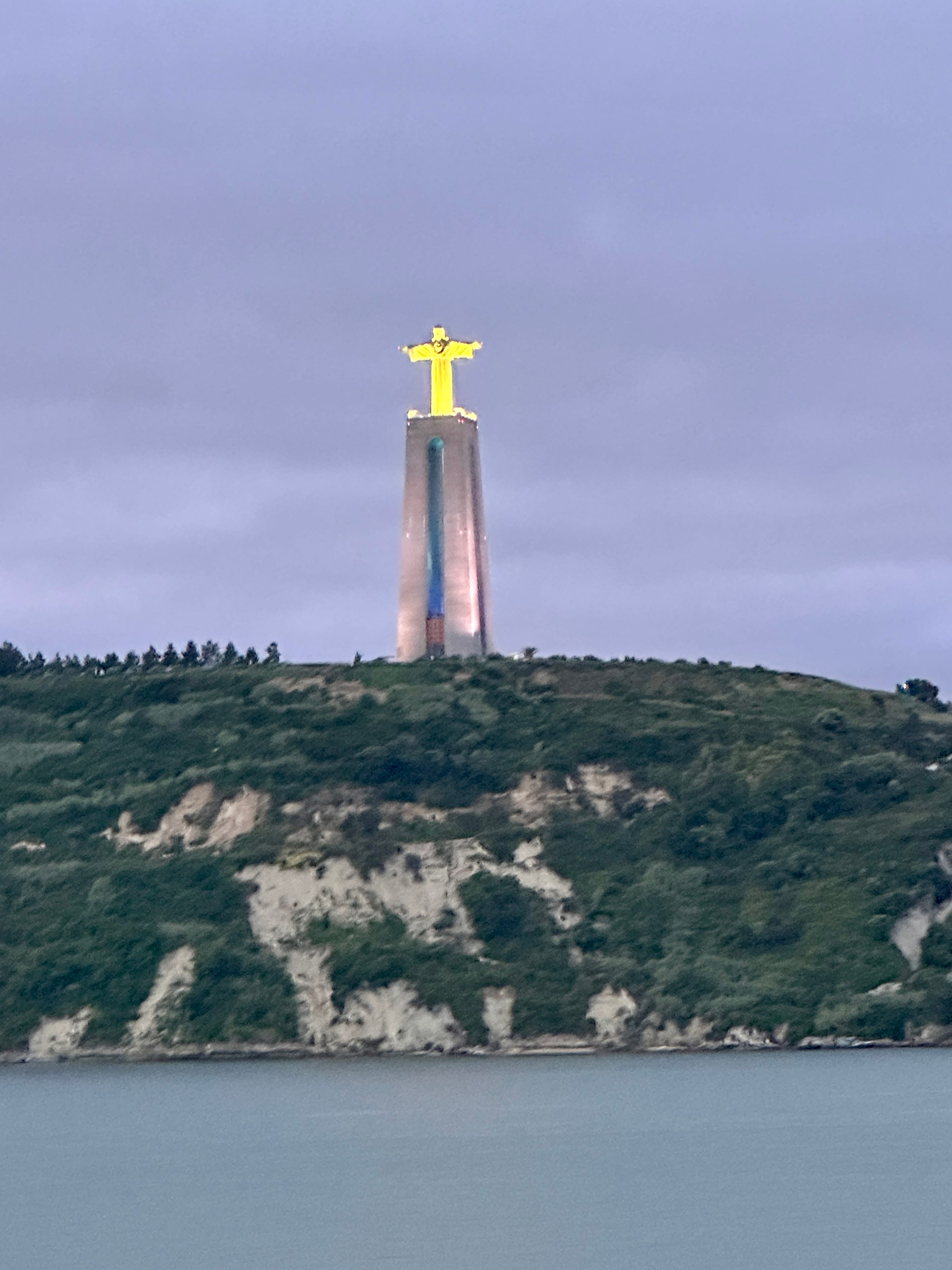
We approached Lisbon before sunrise and had wonderful views from our balcony of the 25 de Abril Bridge and Cristo Rei.
The suspension bridge spanning the Tagus River likens itself to the Golden Gate Bridge in San Francisco. It was renamed from the Salazar Bridge to 25 de Abril Bridge, following the peaceful revolution that restored democracy in 1974.
On the south bank of the Tagus River is the Cristo Rei, a statue depicting Christ, with outstretched arms facing Lisbon (similar to Christ the Redeemer in Brazil). At 92’ in height, it is one of Lisbon’s most iconic views and it was beautifully illuminated as we cruised into the Lisbon Port.
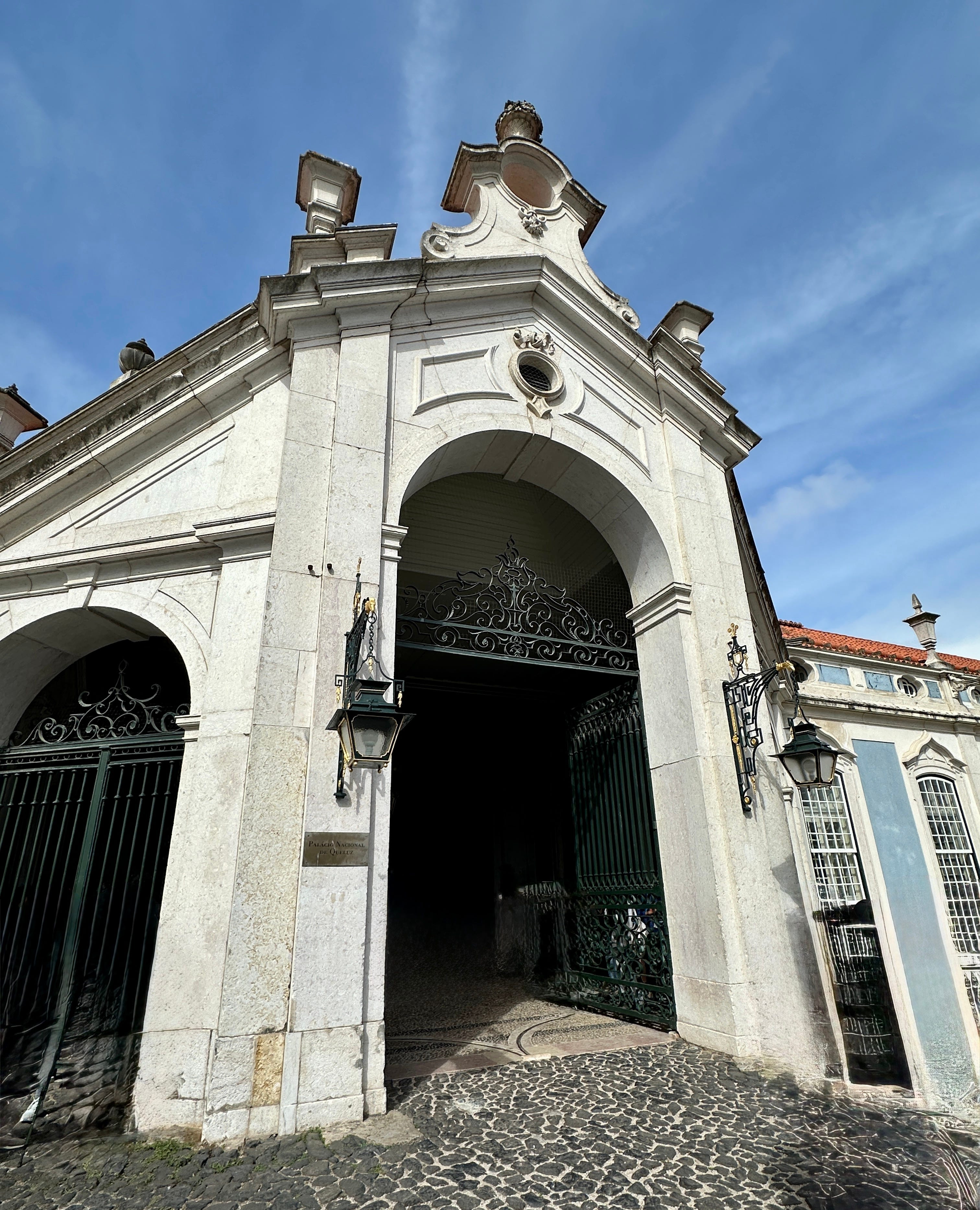
We chose a tour that took us about one hour outside of Lisbon, since we had already seen quite a bit of the city when we had previously visited. The 4.5 hour tour, Palaces and Cascais, included visiting the Palace of Queluz near Sintra, and the resort town of Cascais, neither of which we had been to before.
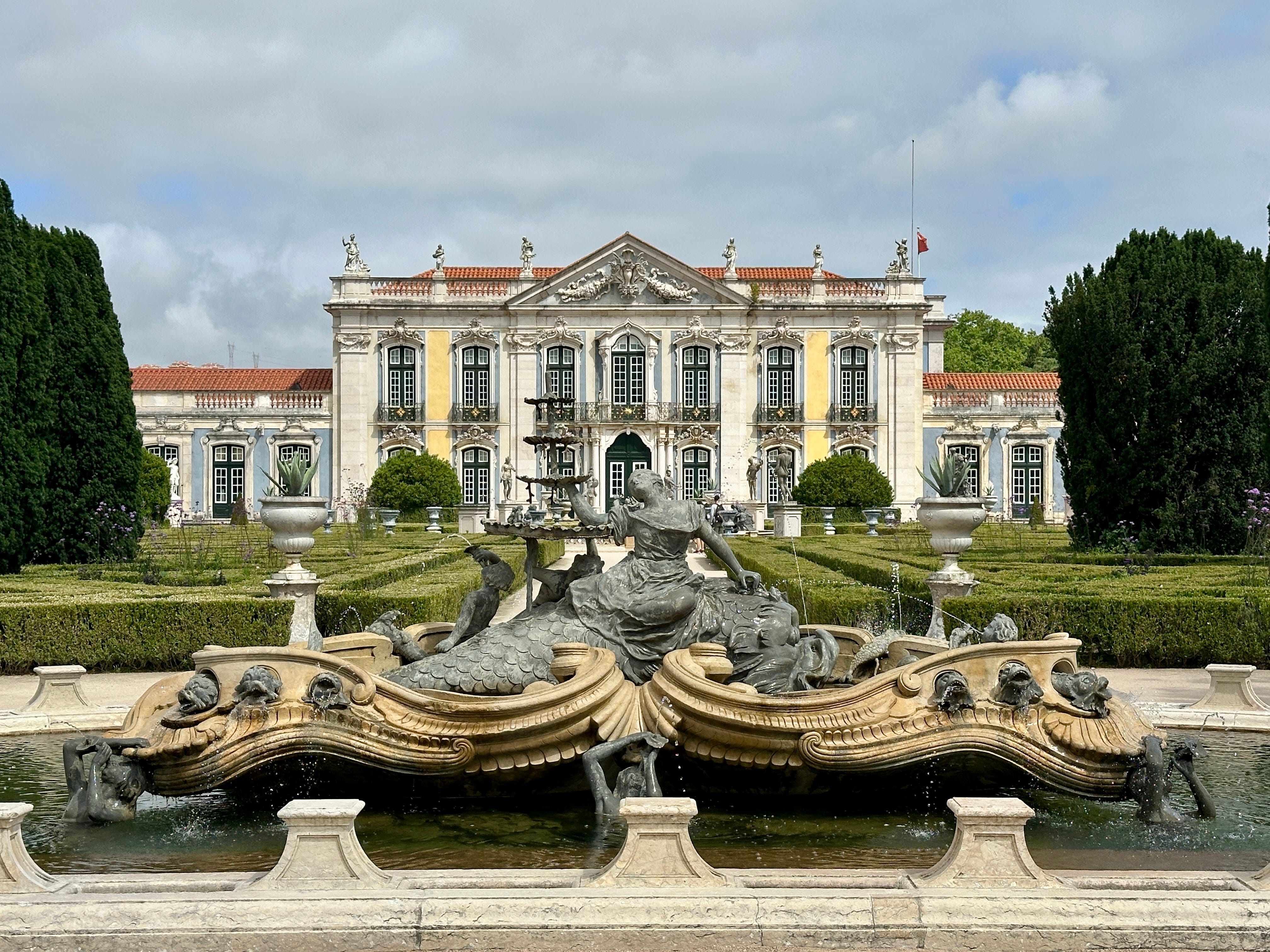
Often called the “Portuguese Versailles,” the Palace of Queluz was built in the mid-18th century as a summer residence for Prince Pedro (later King Pedro III). After a fire destroyed the palace in 1794, Queluz became the principal royal residence.
King Pedro III married his niece, Maria (not uncommon among European families!) and they made Queluz their residence. In 1777 she became Queen and reigned from 1777 until her death in 1816.
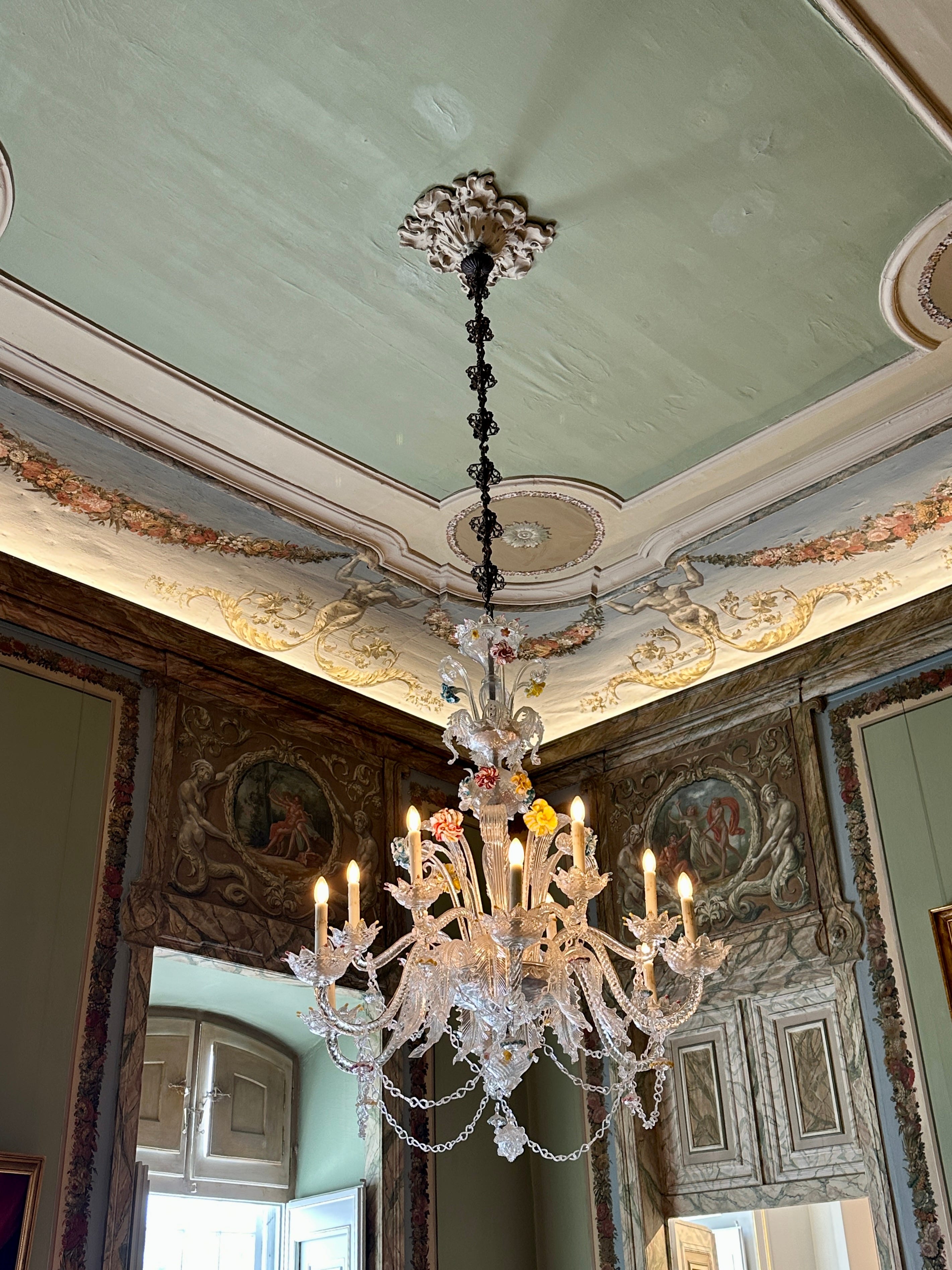
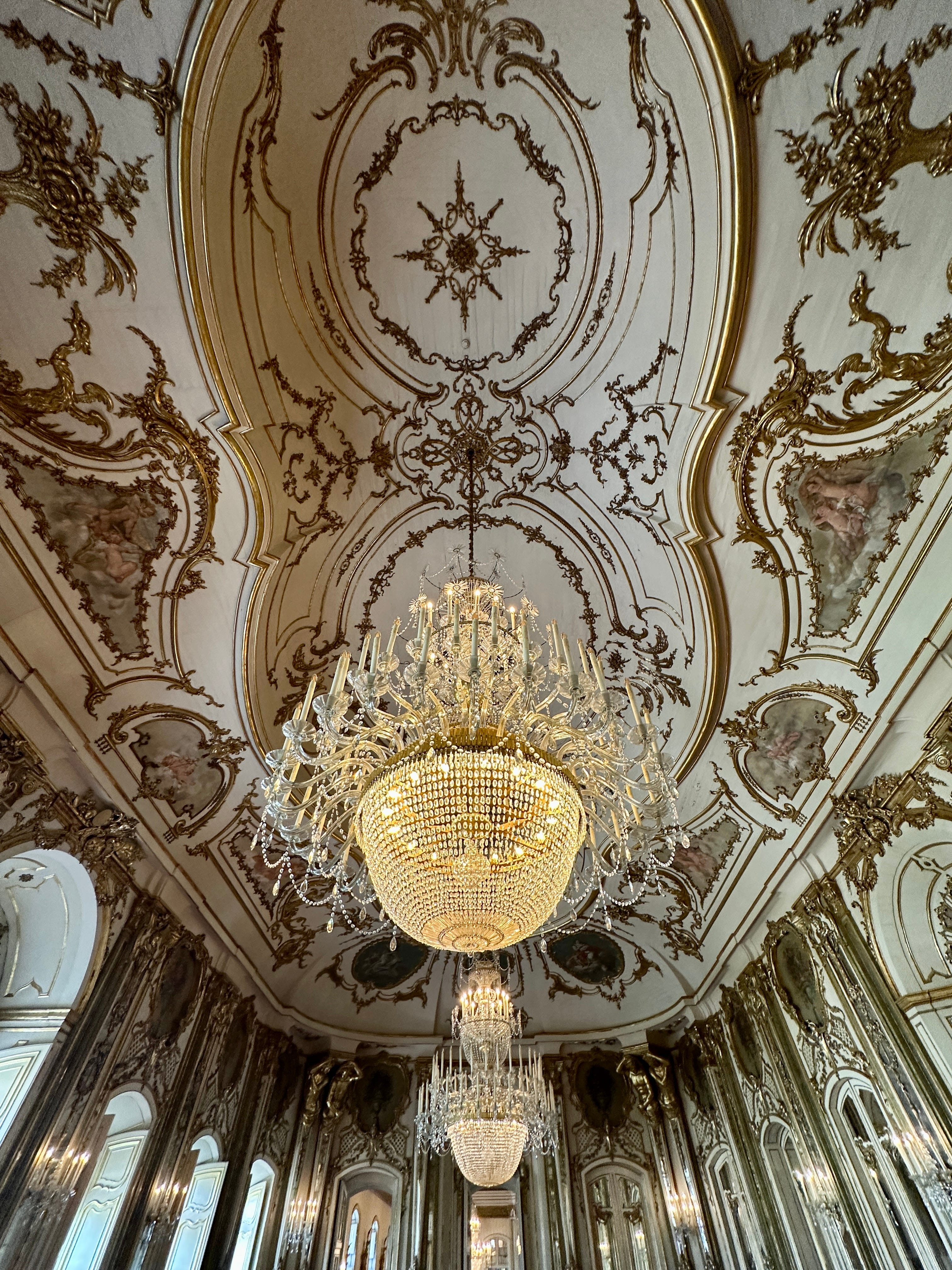
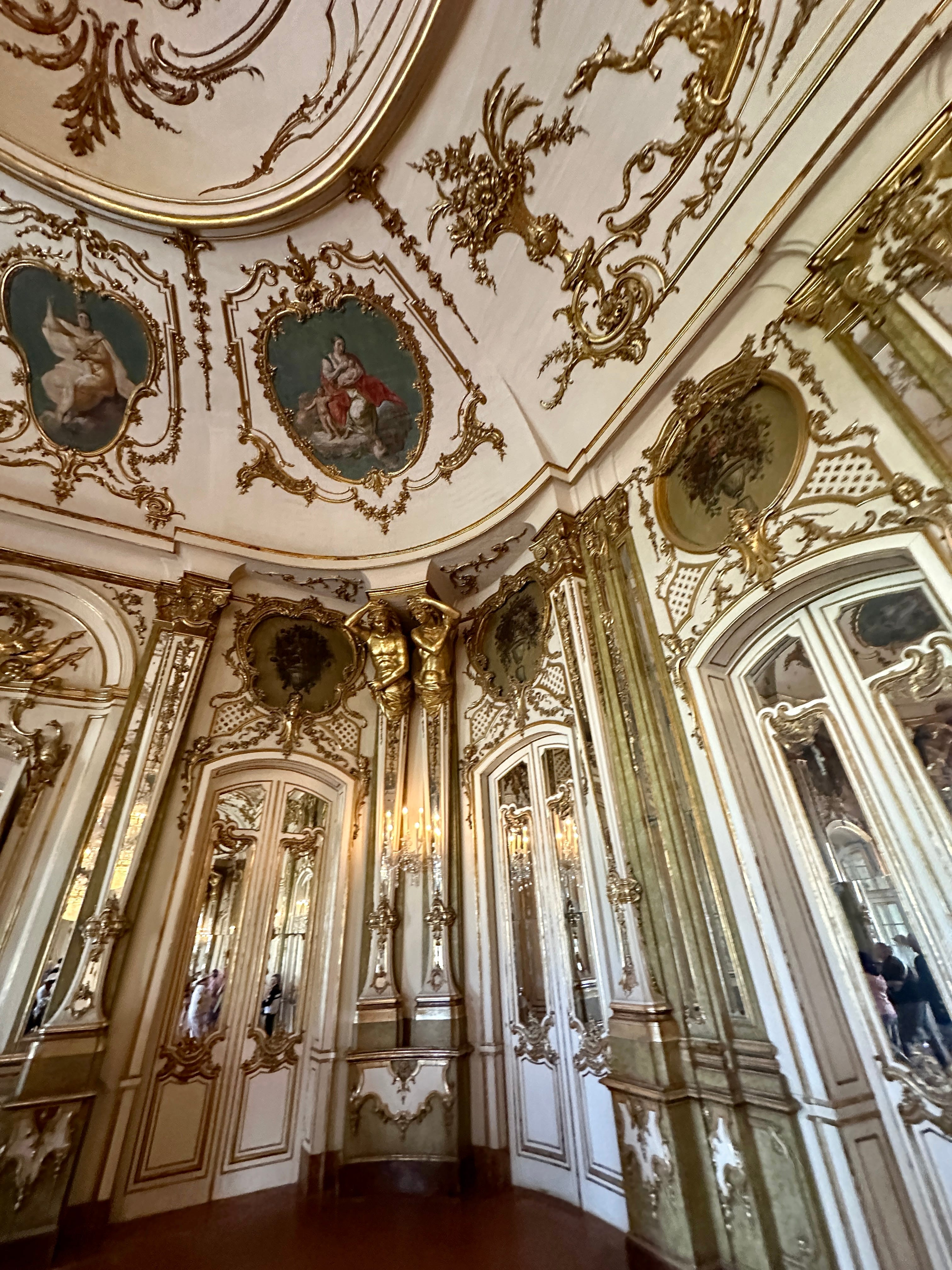
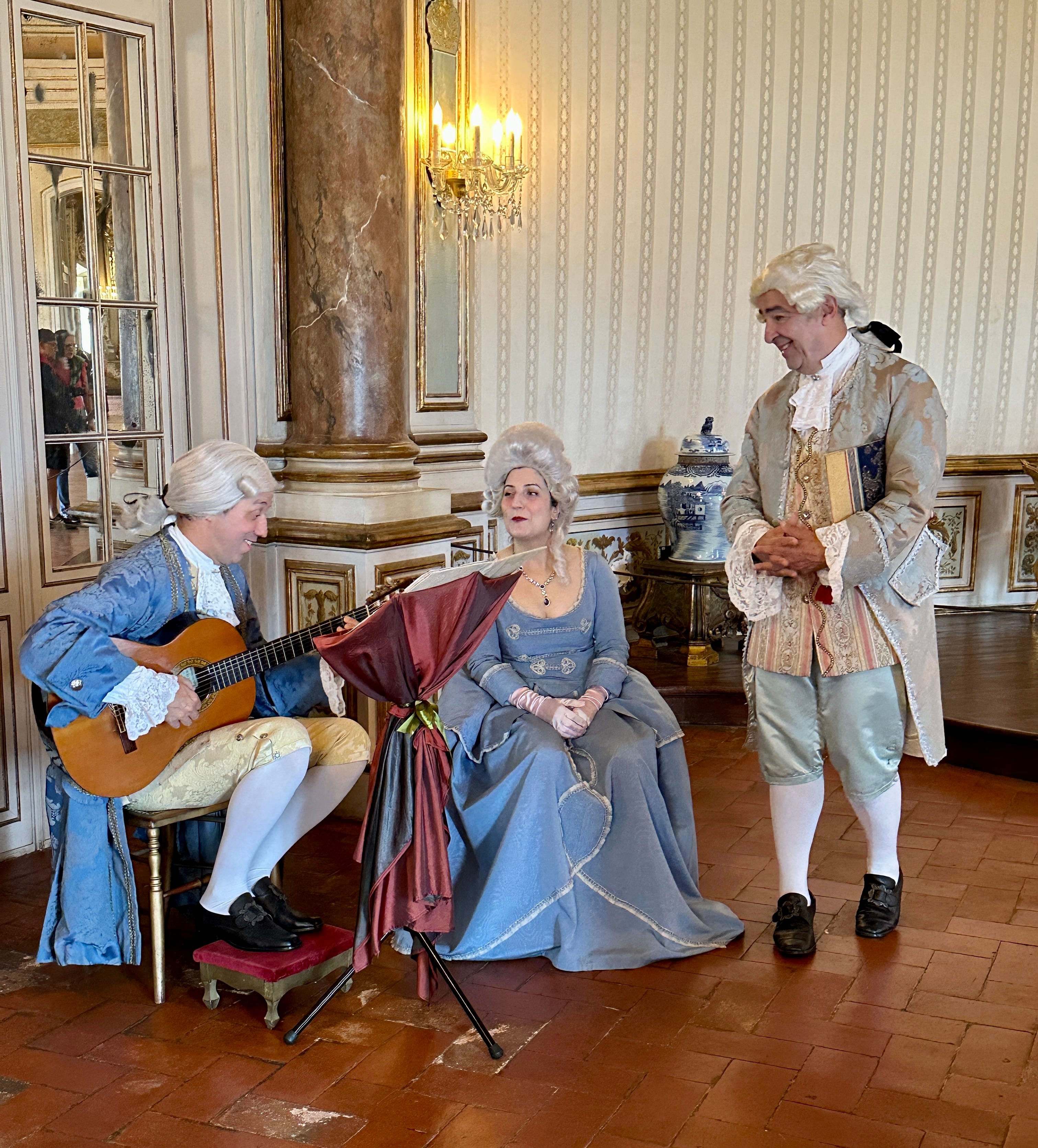
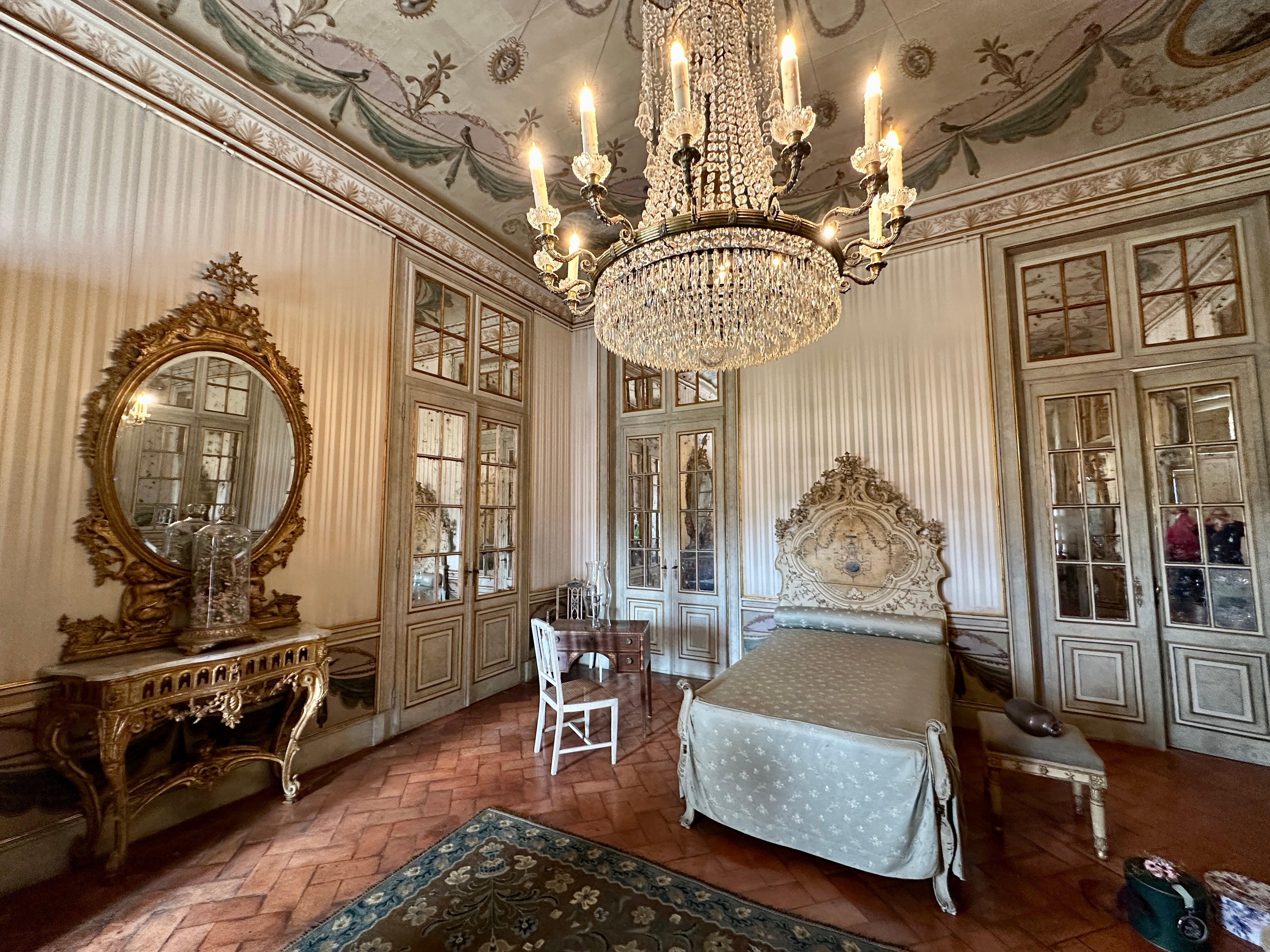
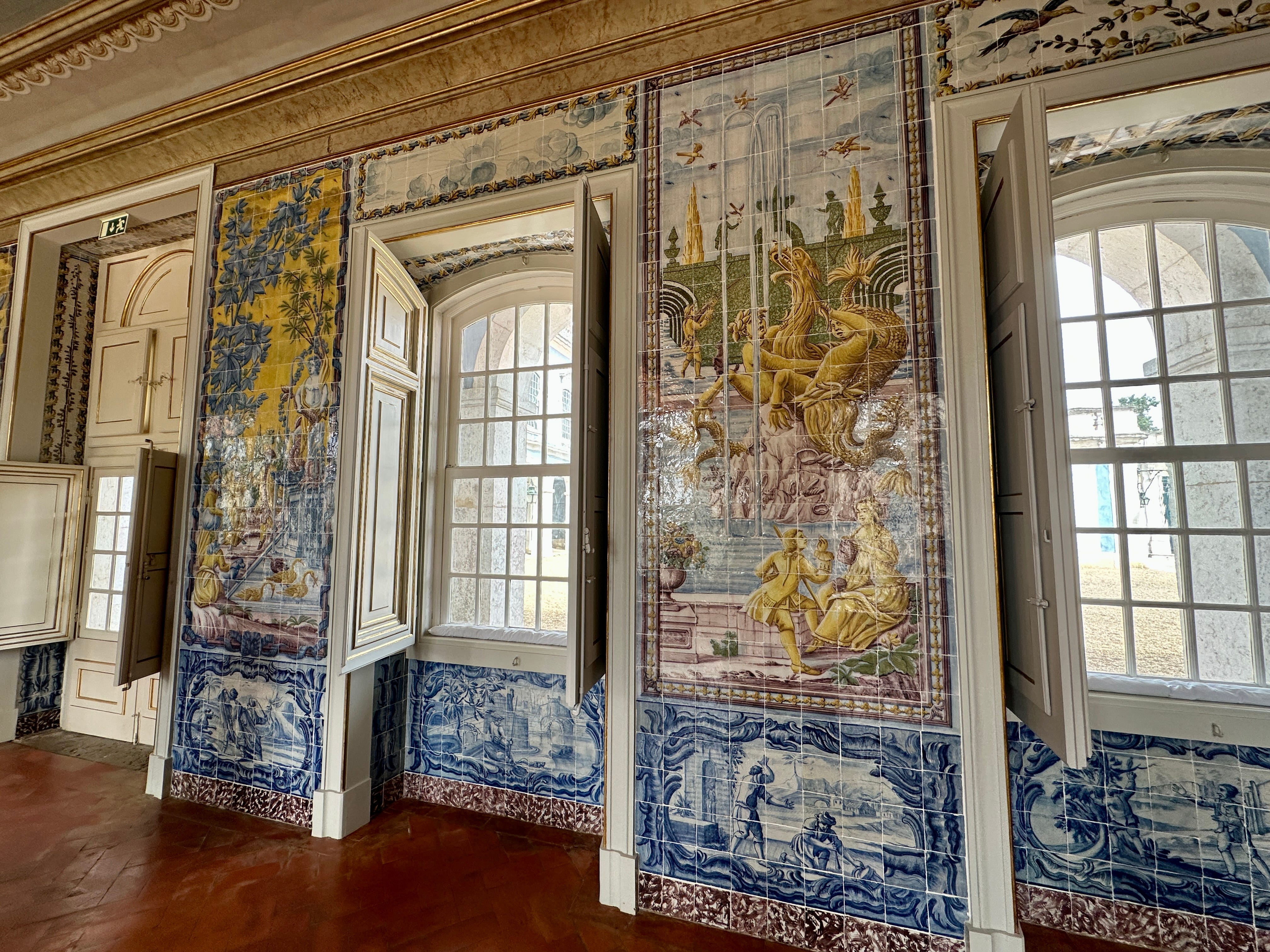
As one would expect in a royal palace, the interior was opulent and ornate, with Rococo style walls, ceilings, and decor. The photos below are an example of the elegance and opulence as we walked through the first few rooms, followed by a number of the specific rooms used by the royal family. I’ve tried to identify the specific rooms when I remembered to take a photo of the sign!
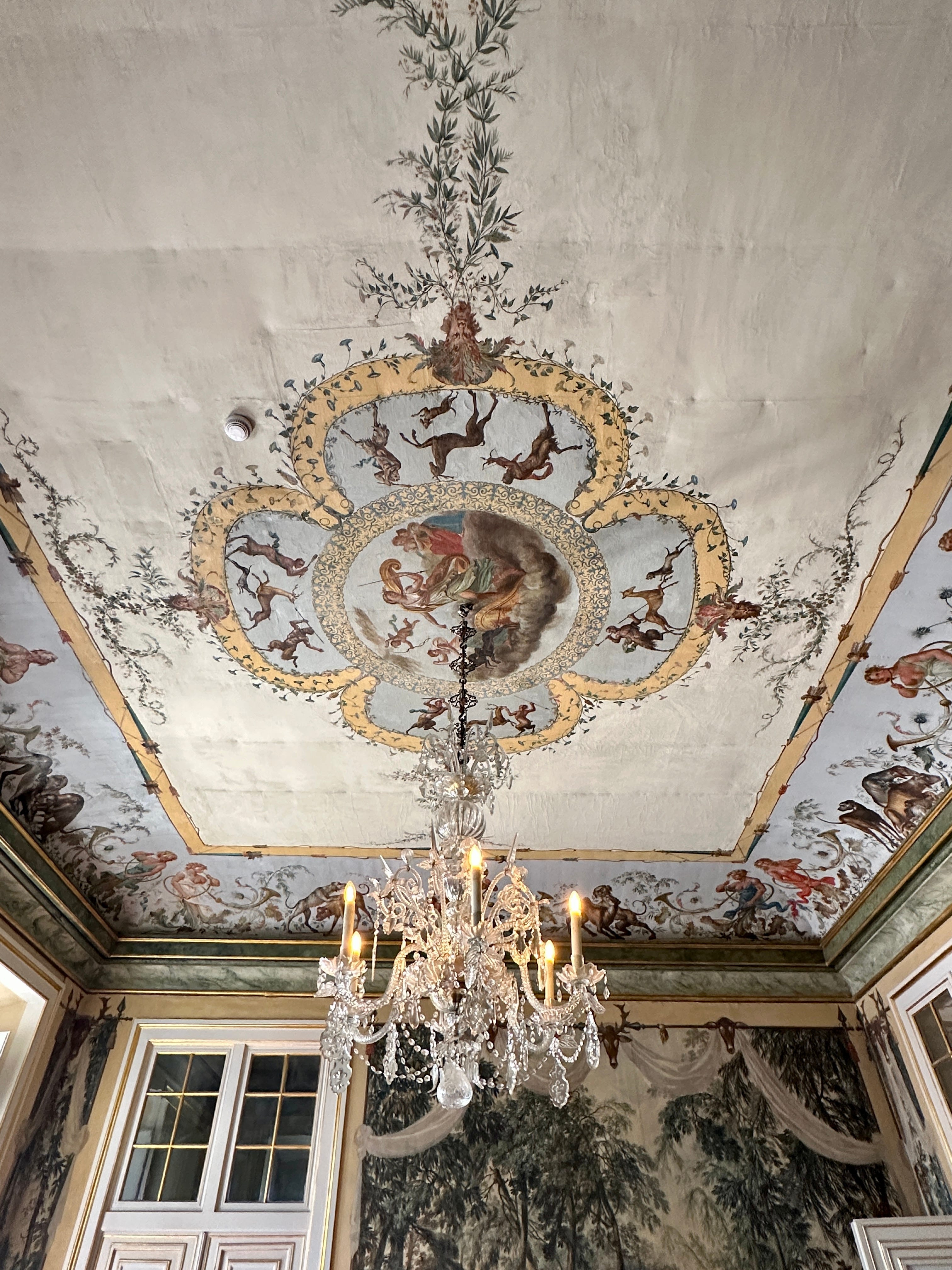
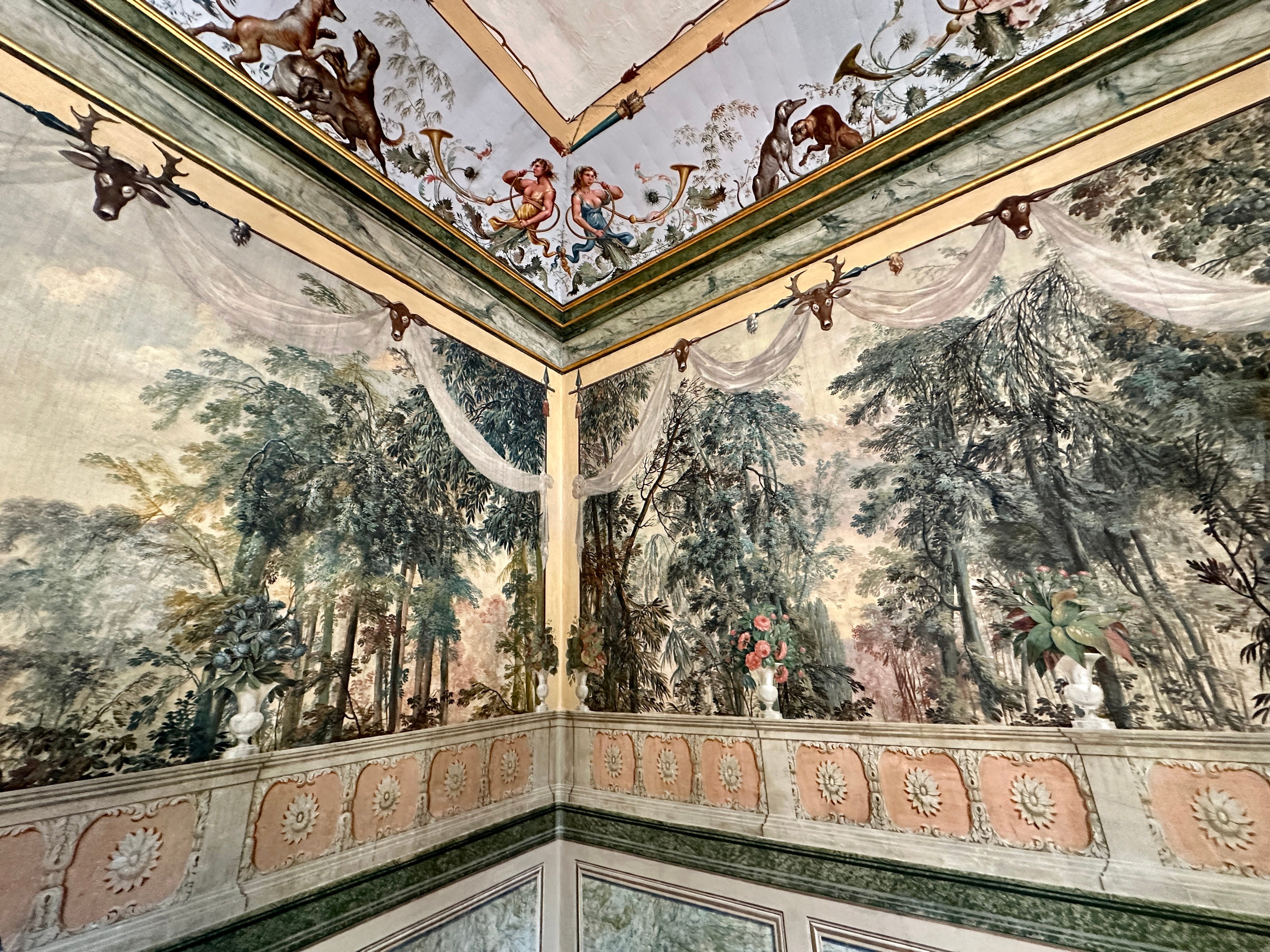
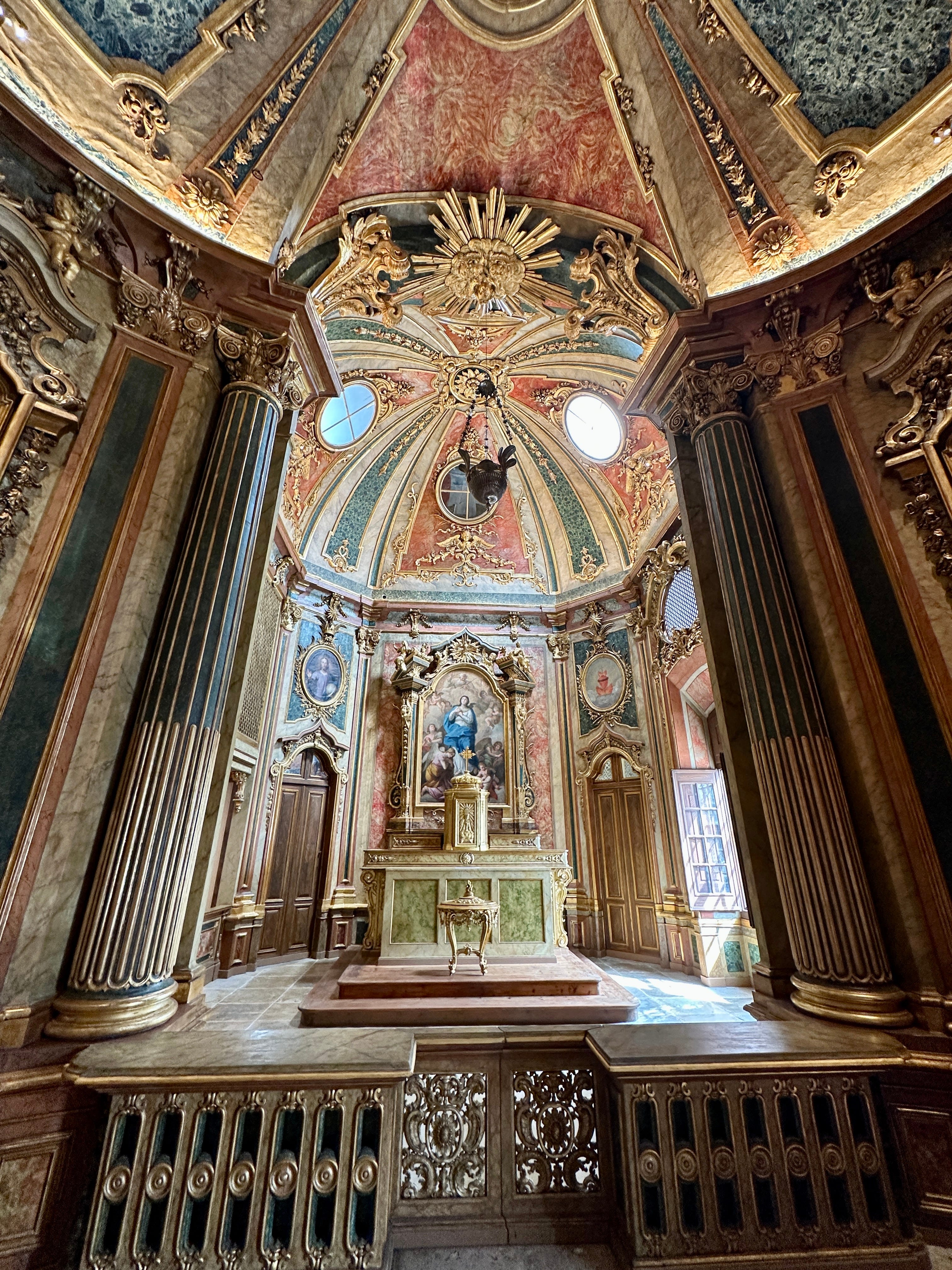
The Palace Chapel was one of the first parts of the building to be constructed in 1752. The royal family attended mass daily and the chapel inside the palace was central to court life.
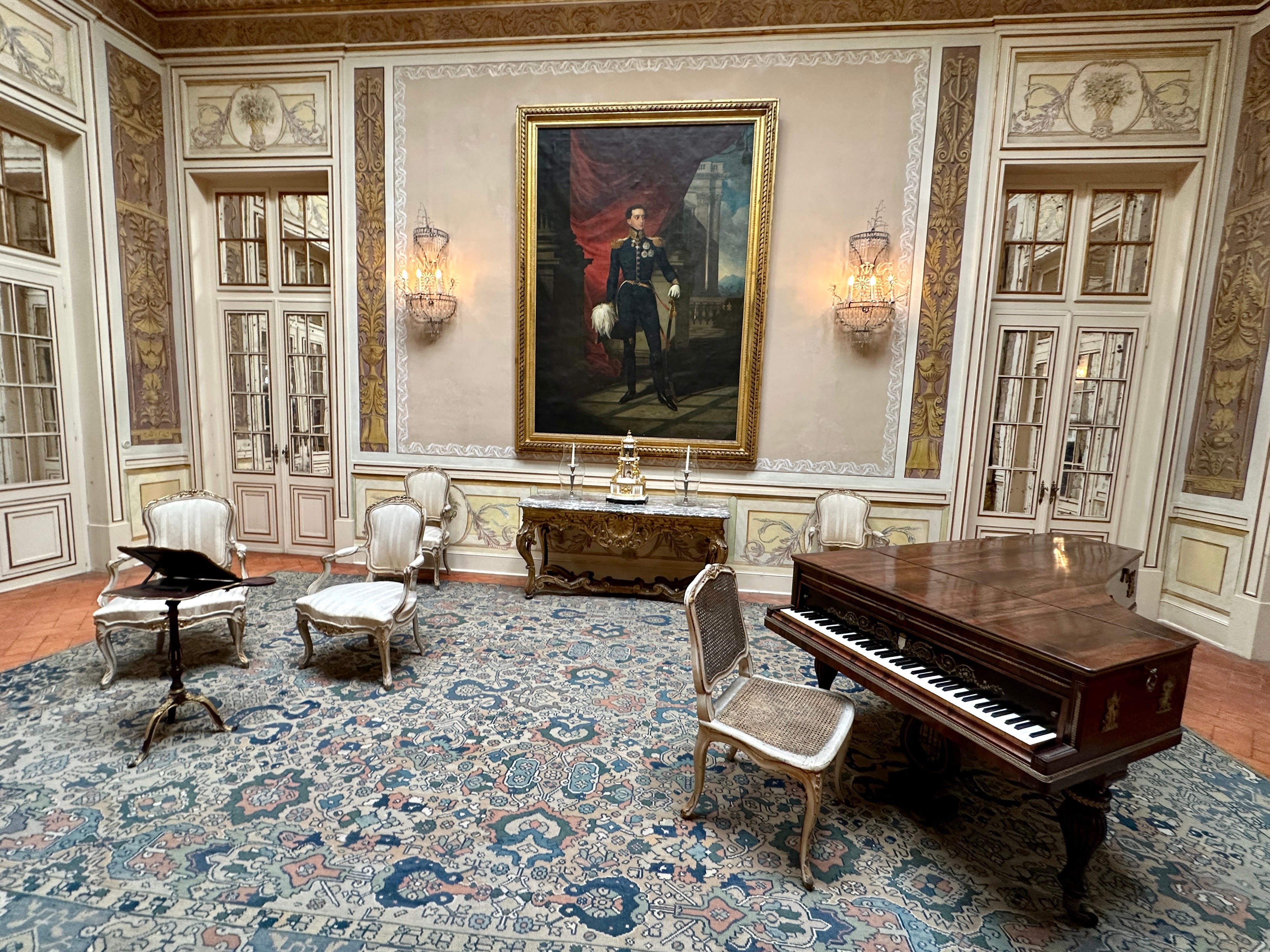
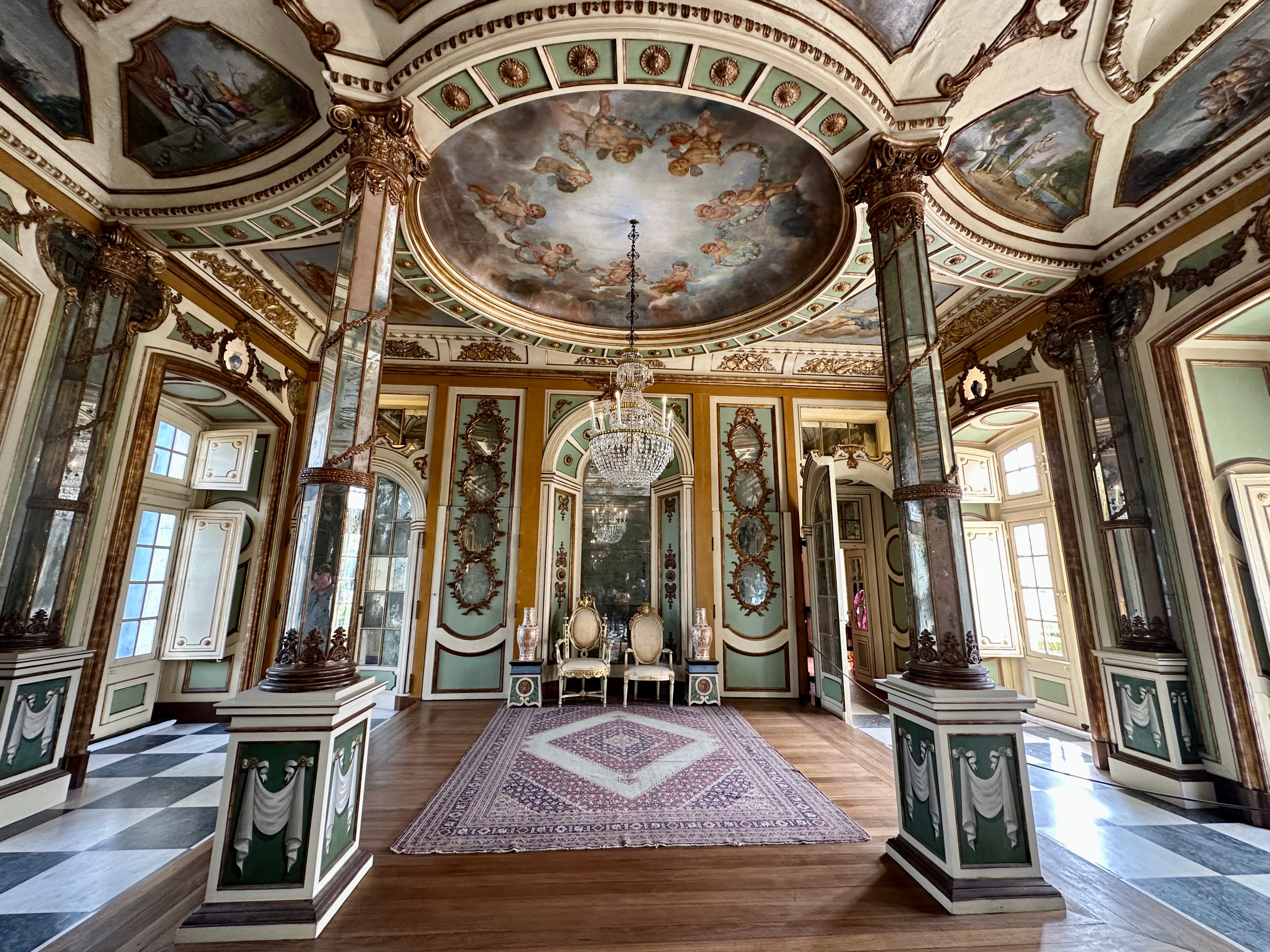
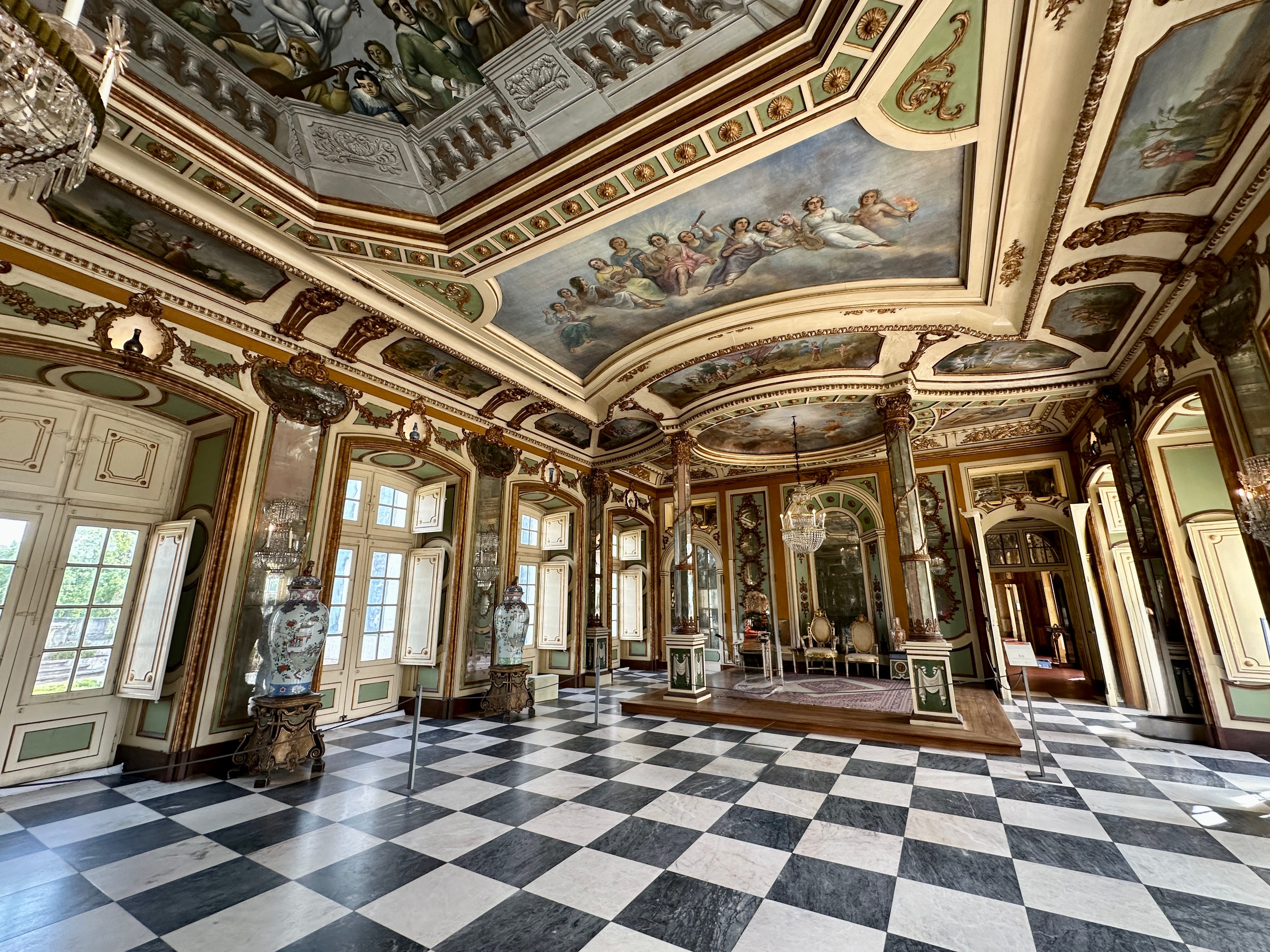
The Ambassador’s Room is one of the palace’s great ceremonial spaces. The ceiling painting shows the royal family attending a concert, while mirrors and Chinese porcelain emphasize Portugal’s global wealth during this time.
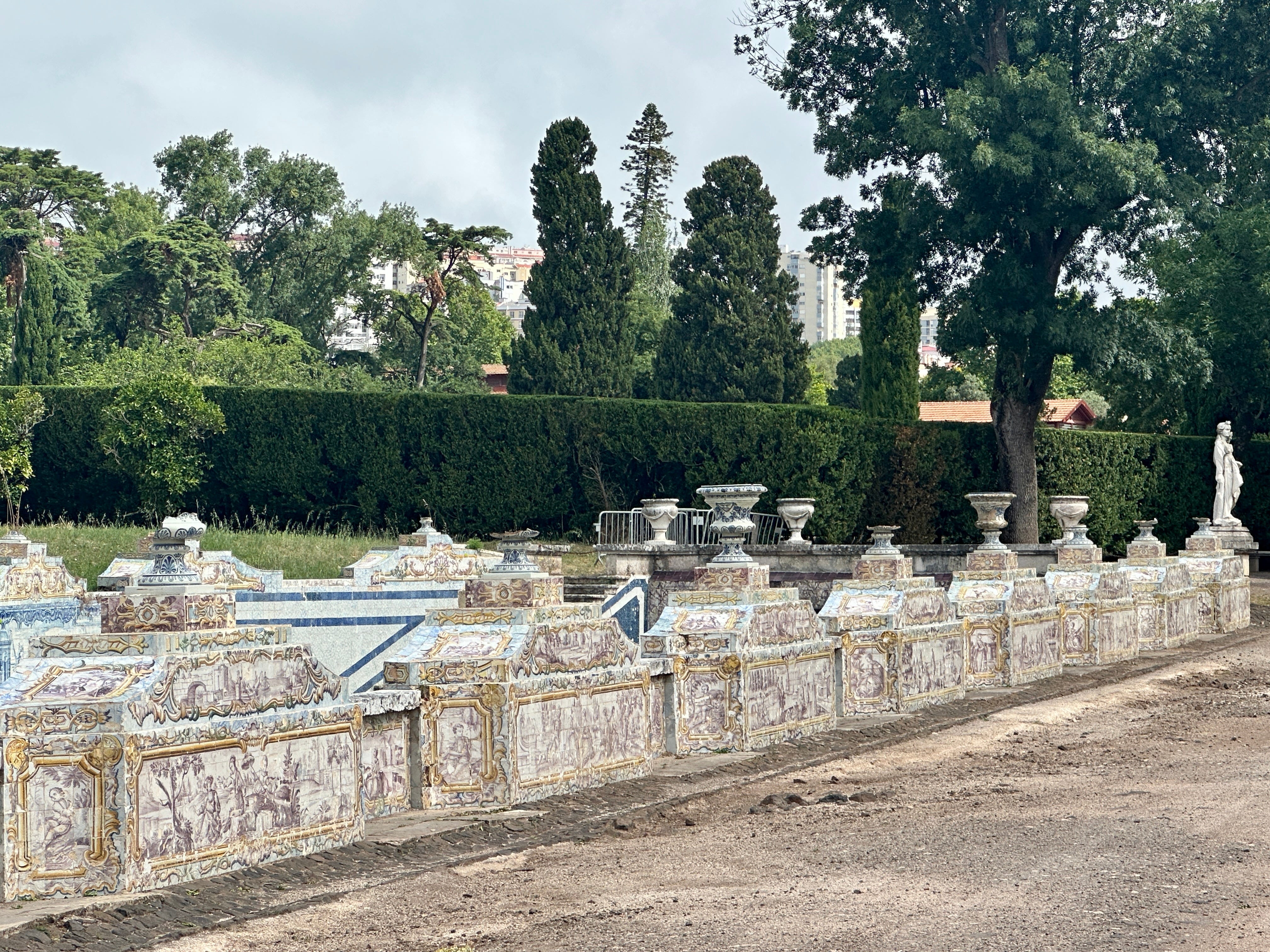
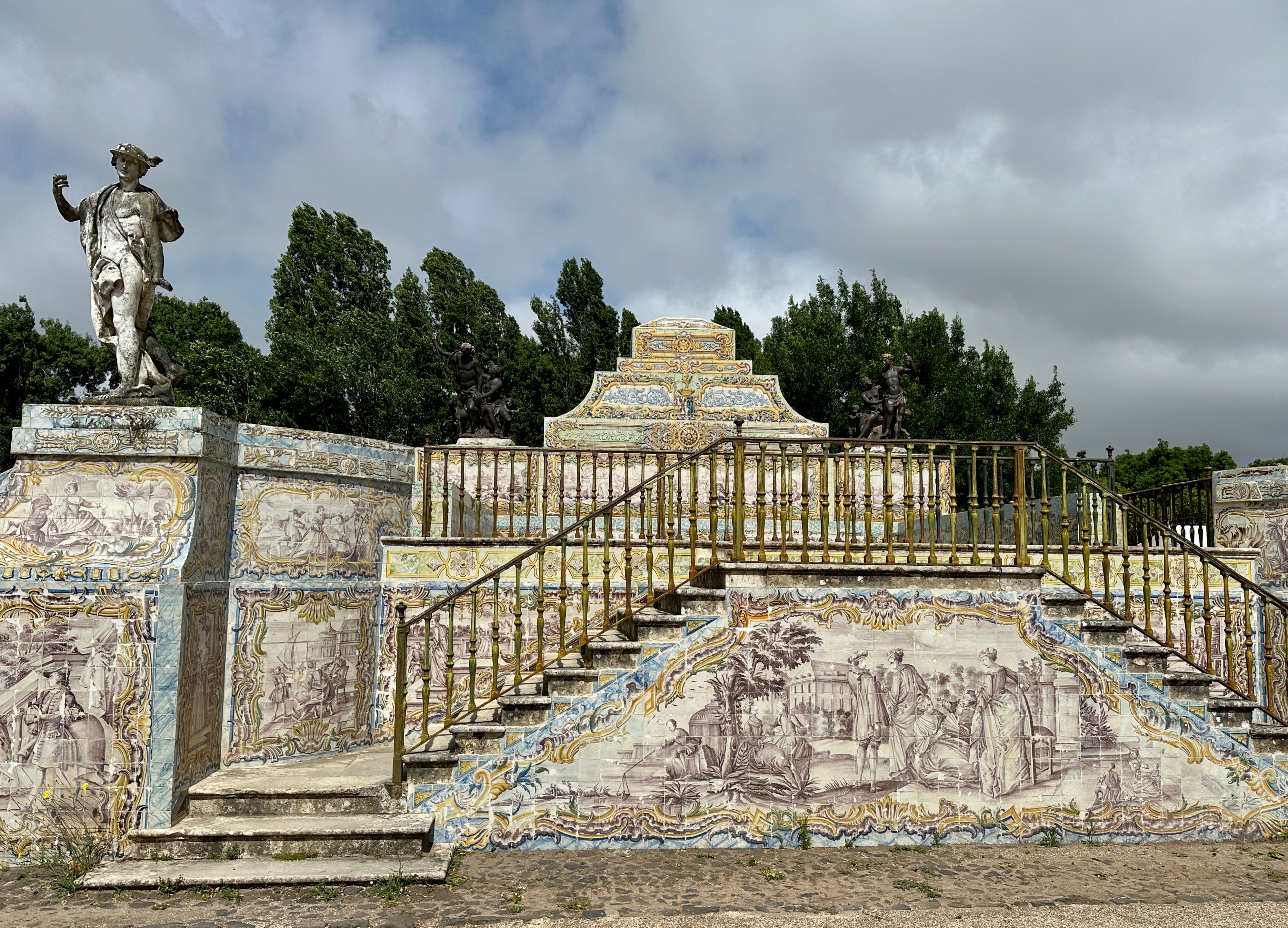
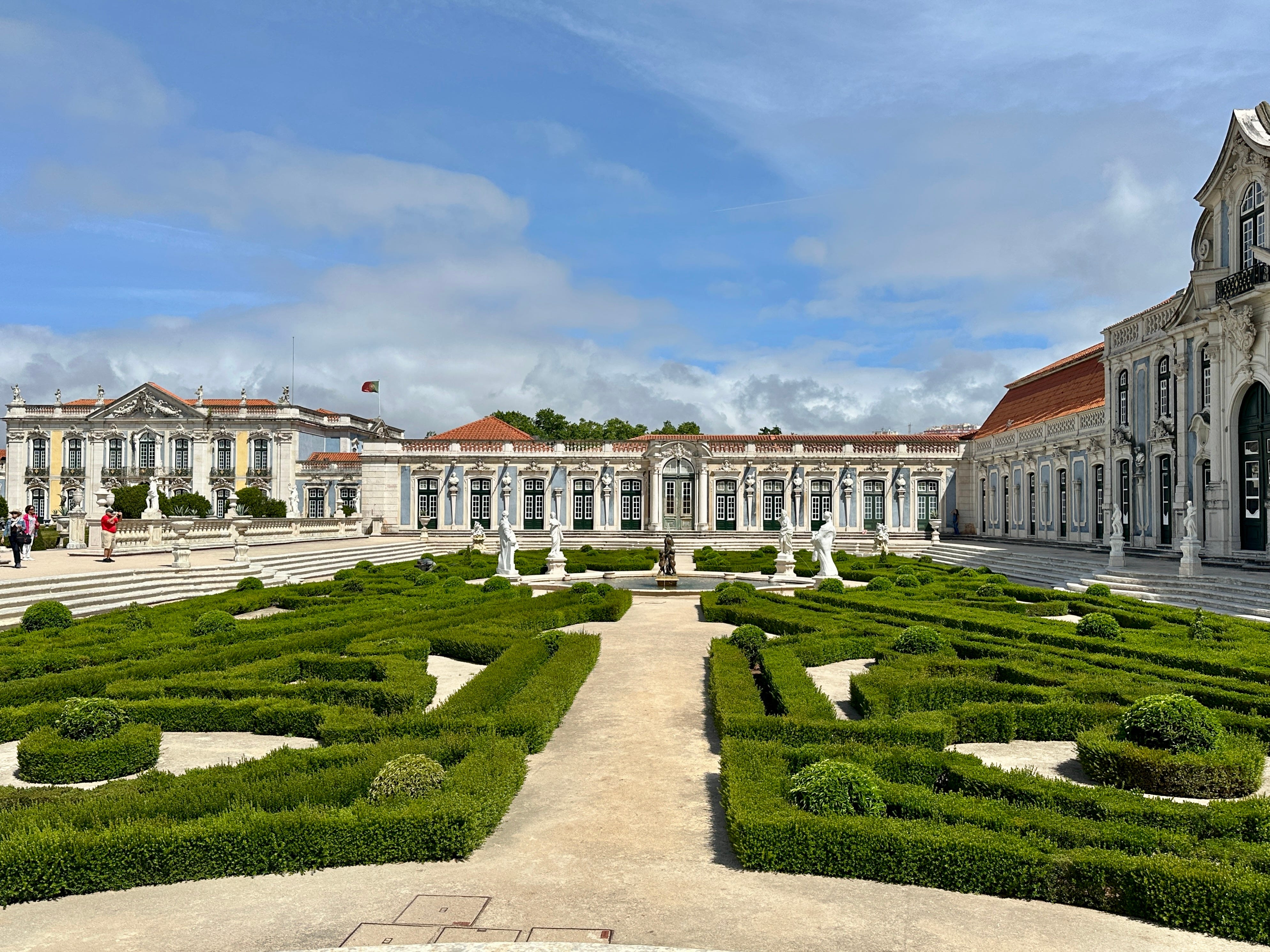
The exterior grounds are almost as important as the palace itself; not just meant to be beautiful, but to be a place for royal parties, music, boating, and leisurely walks.
One of the most distinctive features is the Tiled Canal. The canal is over 100 metres long and lined with azulejo tile panels. During royal celebrations, small decorated boats would float along the water.
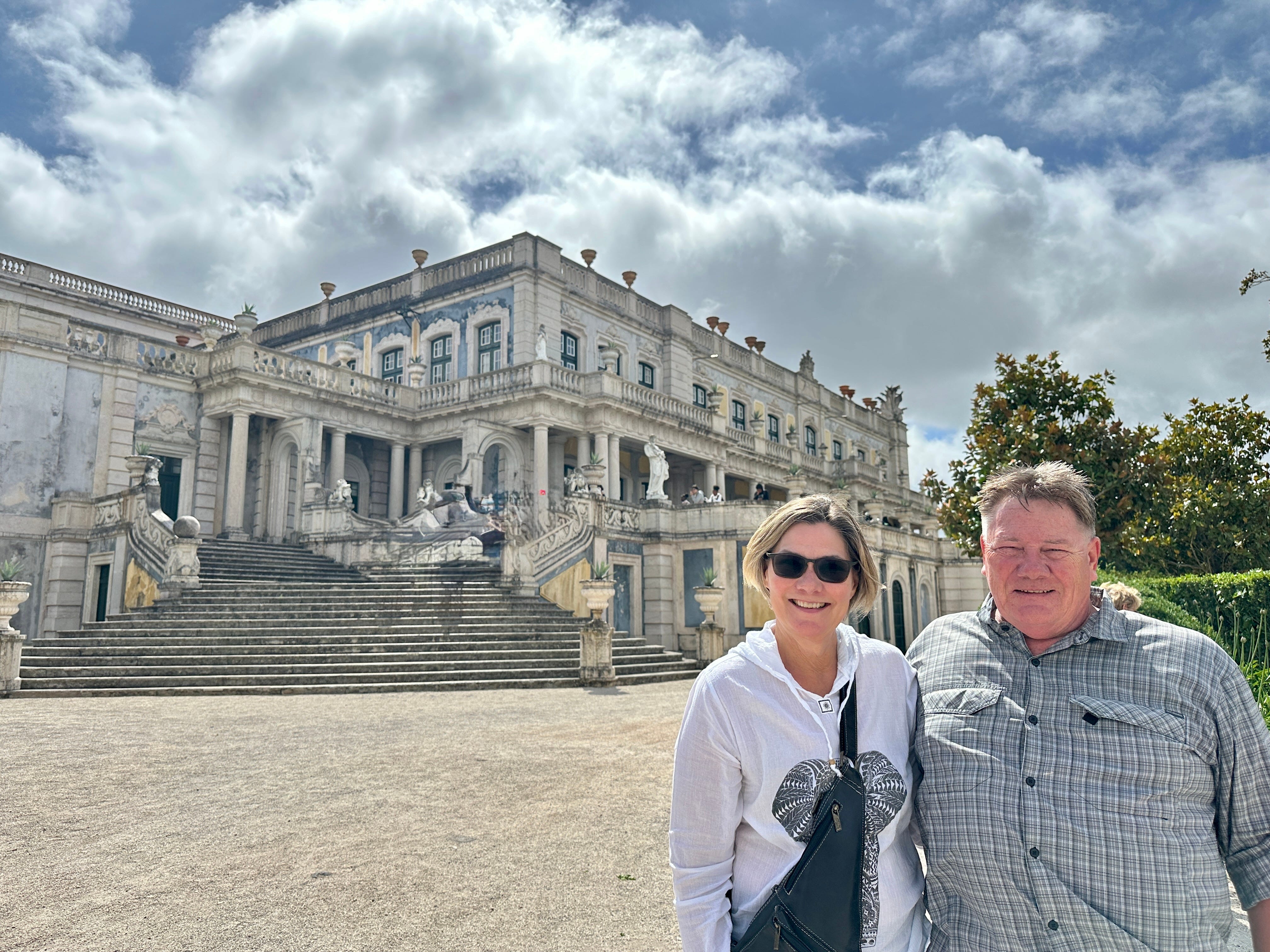
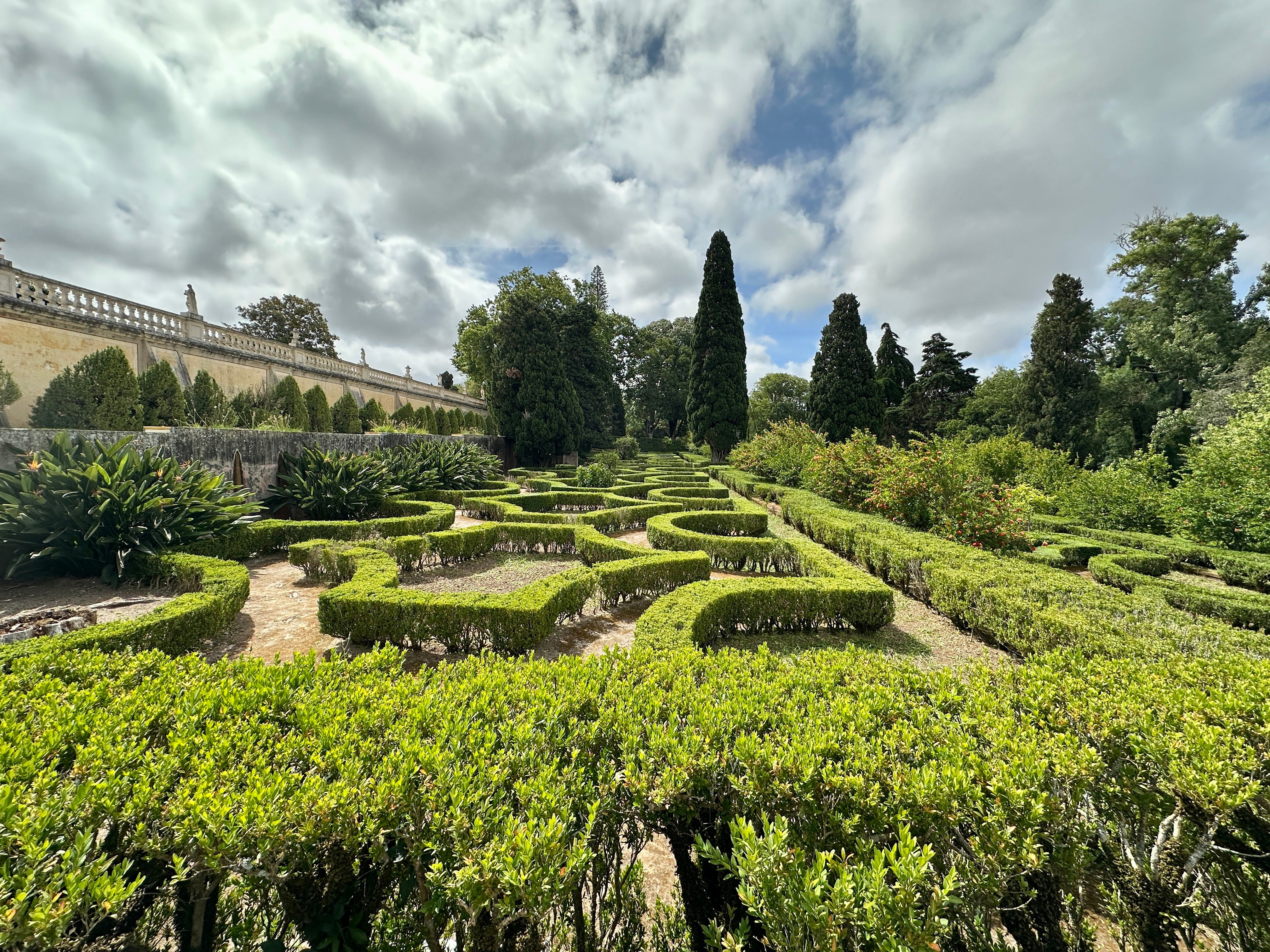
There are 2 formal gardens - the Hanging Garden and the Malta Garden. The designs were inspired by the great formal gardens of France, particularly those associated with Versailles.
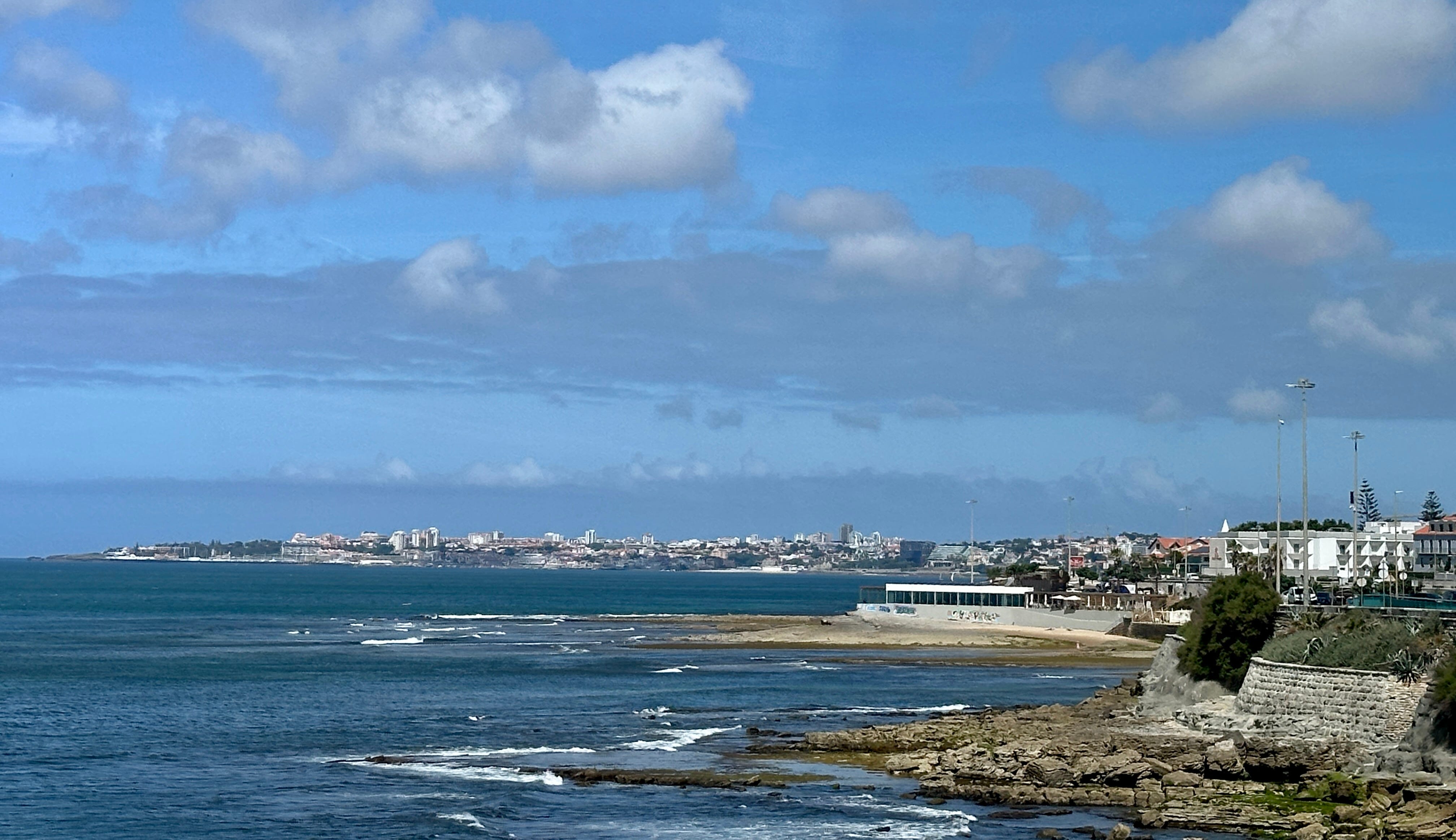
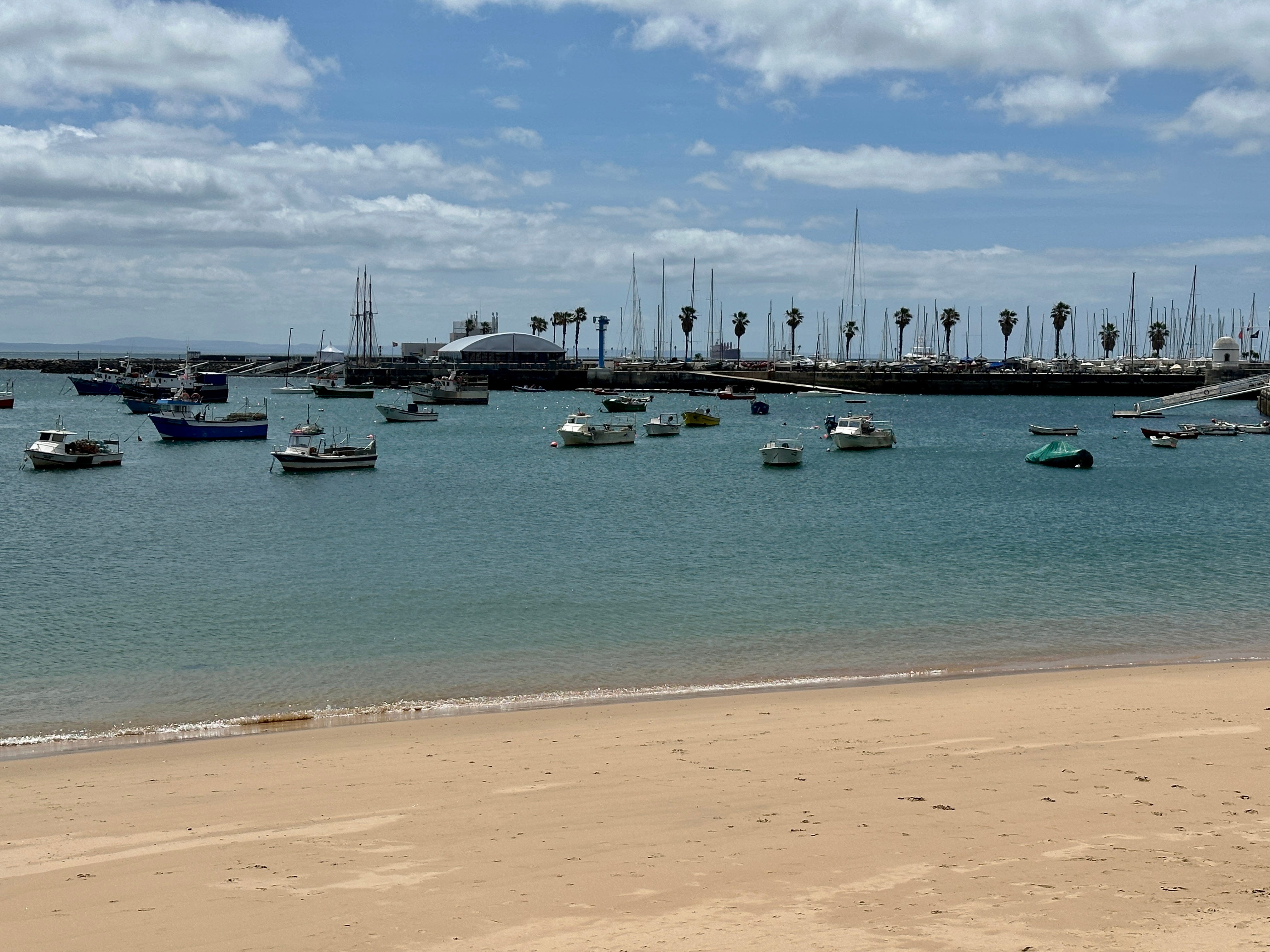
After our palace visit, we drove to Cascais, about 30 km west of Lisbon. This coastal town began as a small fishing village and remains one of the country’s most charming seaside destinations.
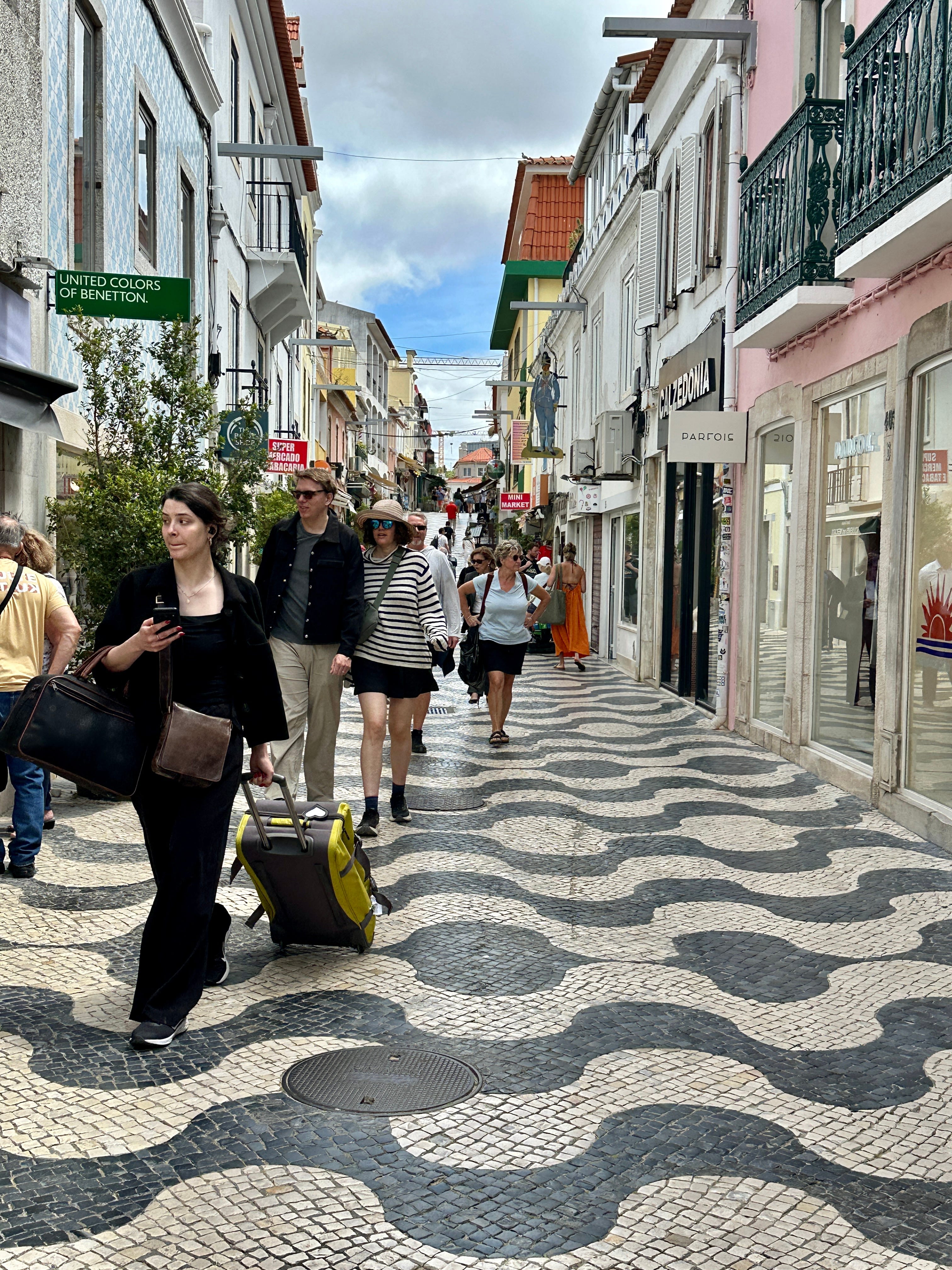
The narrowed cobbled streets have beautiful black and white wave-patterned pavements called Calçada Portuguesa. The paving is made by hand from small stones: white limestone used for the light areas and black basalt used for the dark areas. Skilled craftsmen, called calceteiros, fit the stones together one by one like a giant mosaic. The most famous wave design is known as mar largo (“wide sea”).
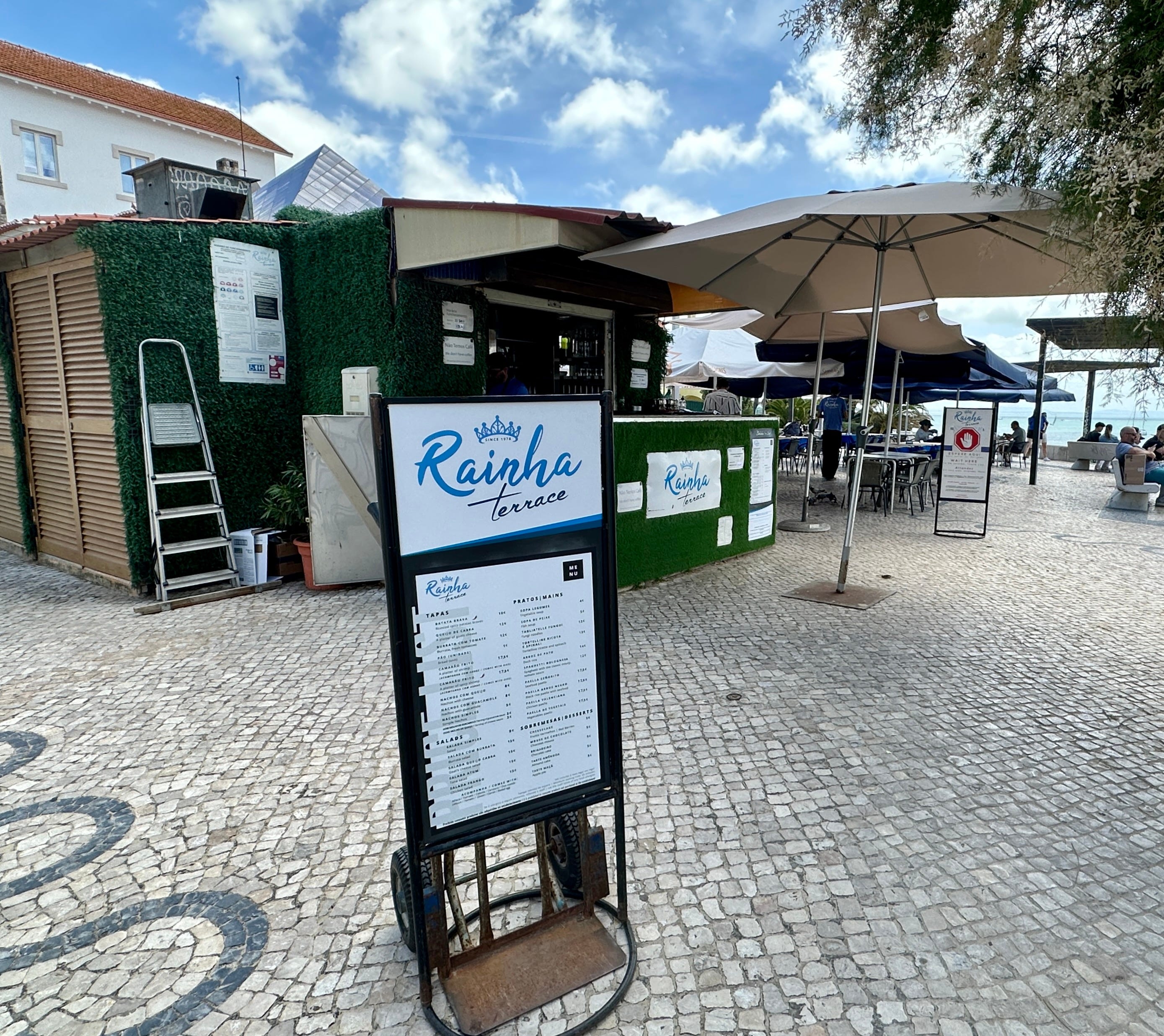
After strolling up the pedestrian street, we found Rainha Terrace, a restaurant with marina views and a delicious menu.
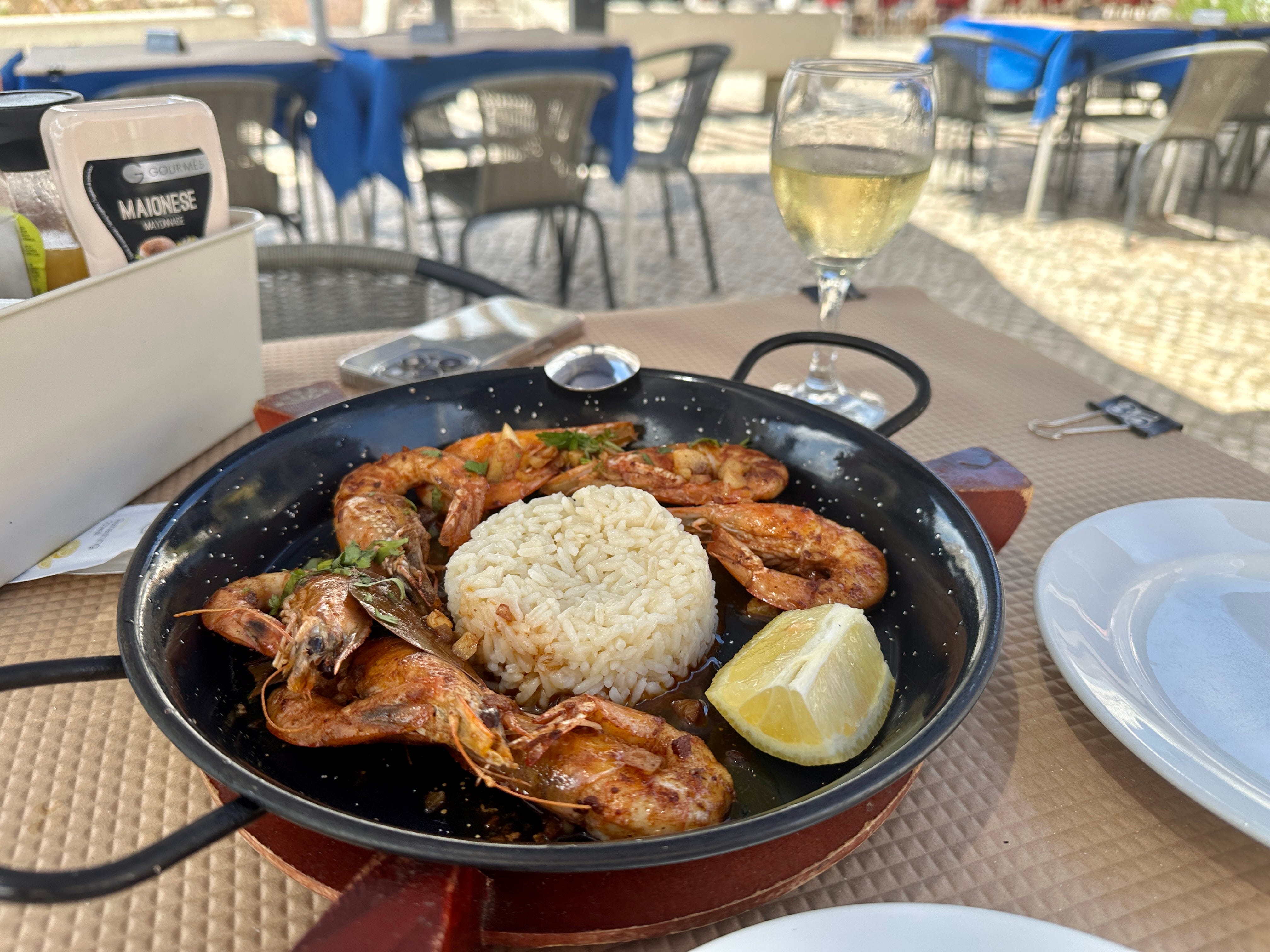
We shared a skillet of spicy shrimp and had a cold glass of Vinho Verde - a perfect lunch!
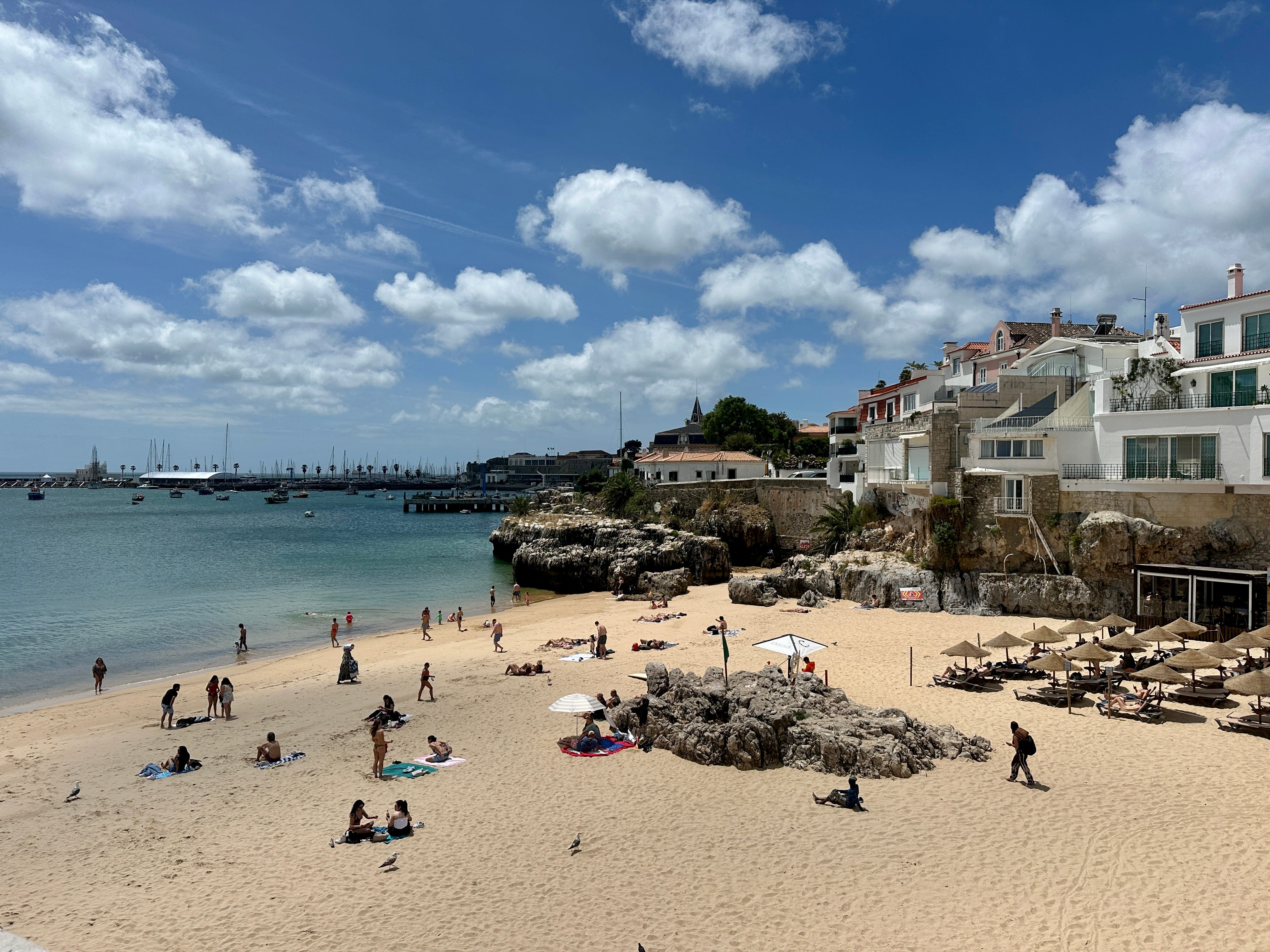
Our lunch view was of this small beach, tucked between rocky cliffs and seaside houses.
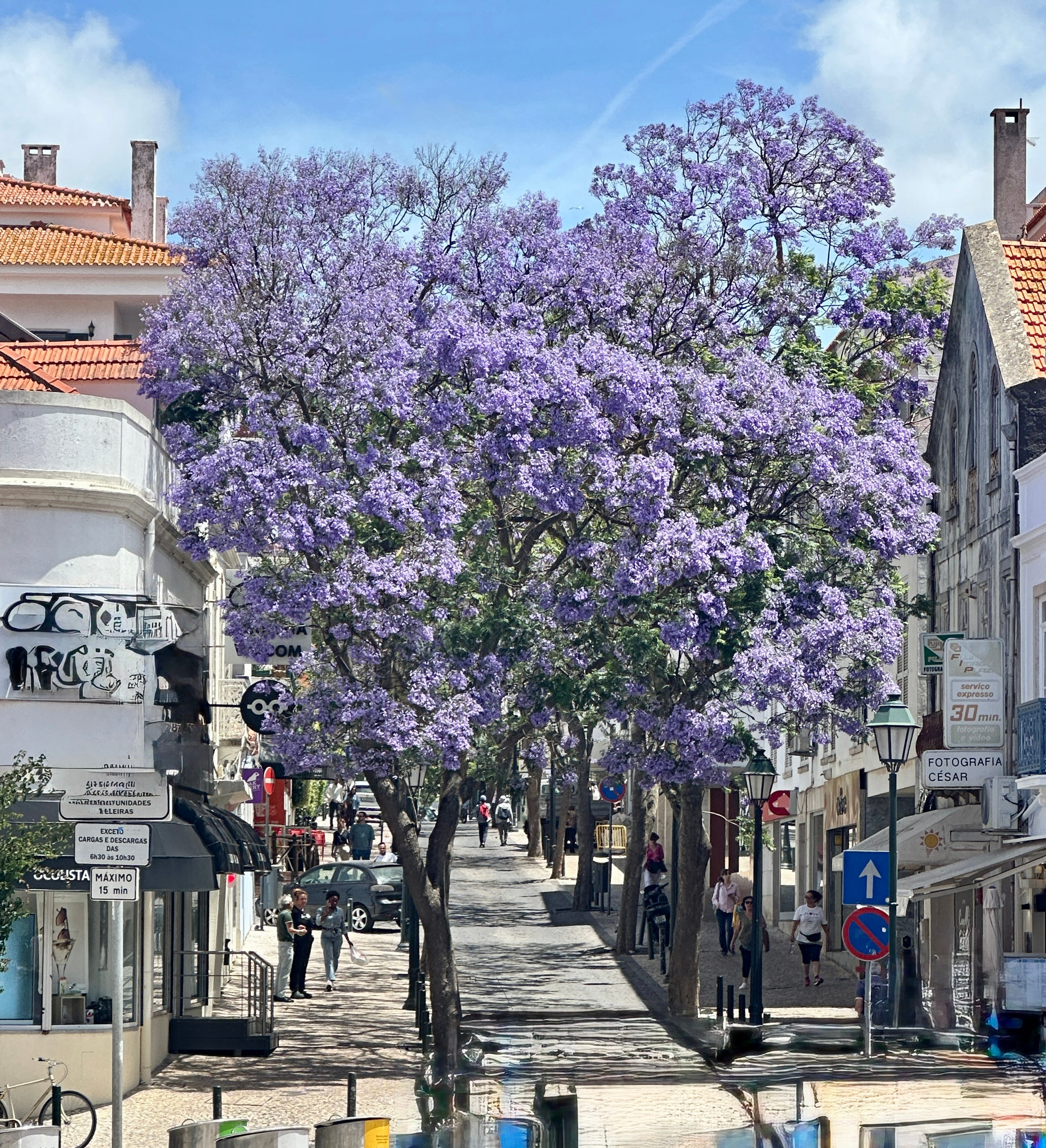
Cascais is another place we will have on our “must-return” list. As we keep saying, that list has grown exponentially on this trip!
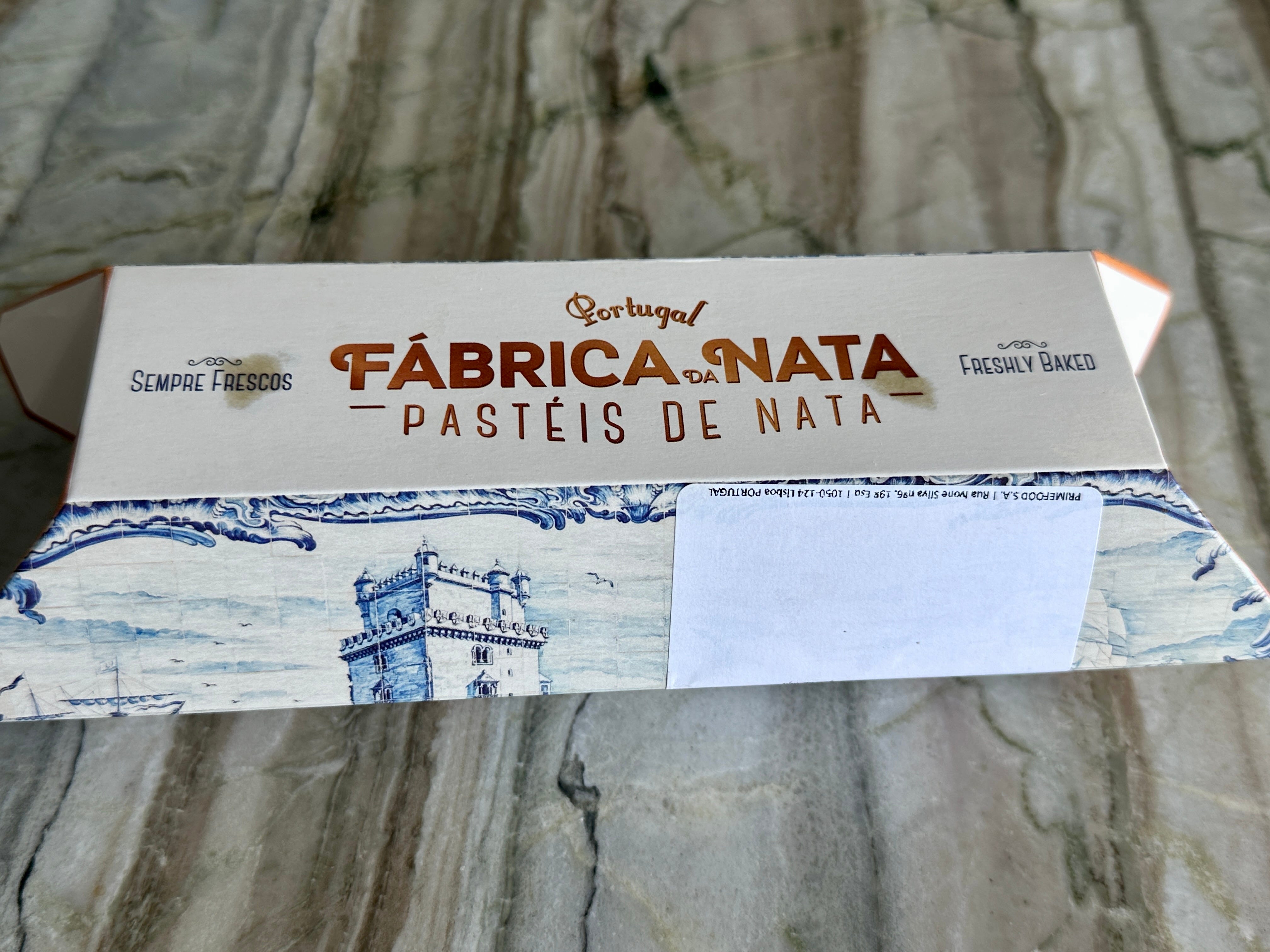
No trip to Lisbon is complete without having at least one (or six- but we shared!) Pastel de Nata, Portugal’s famous custard tarts. The tart originated in Belém, with the most famous version called Pastéis de Belém, made from a closely guarded recipe. We didn’t make it to Belém on this trip, but these were equally delicious, especially sprinkled with cinnamon and powdered sugar.
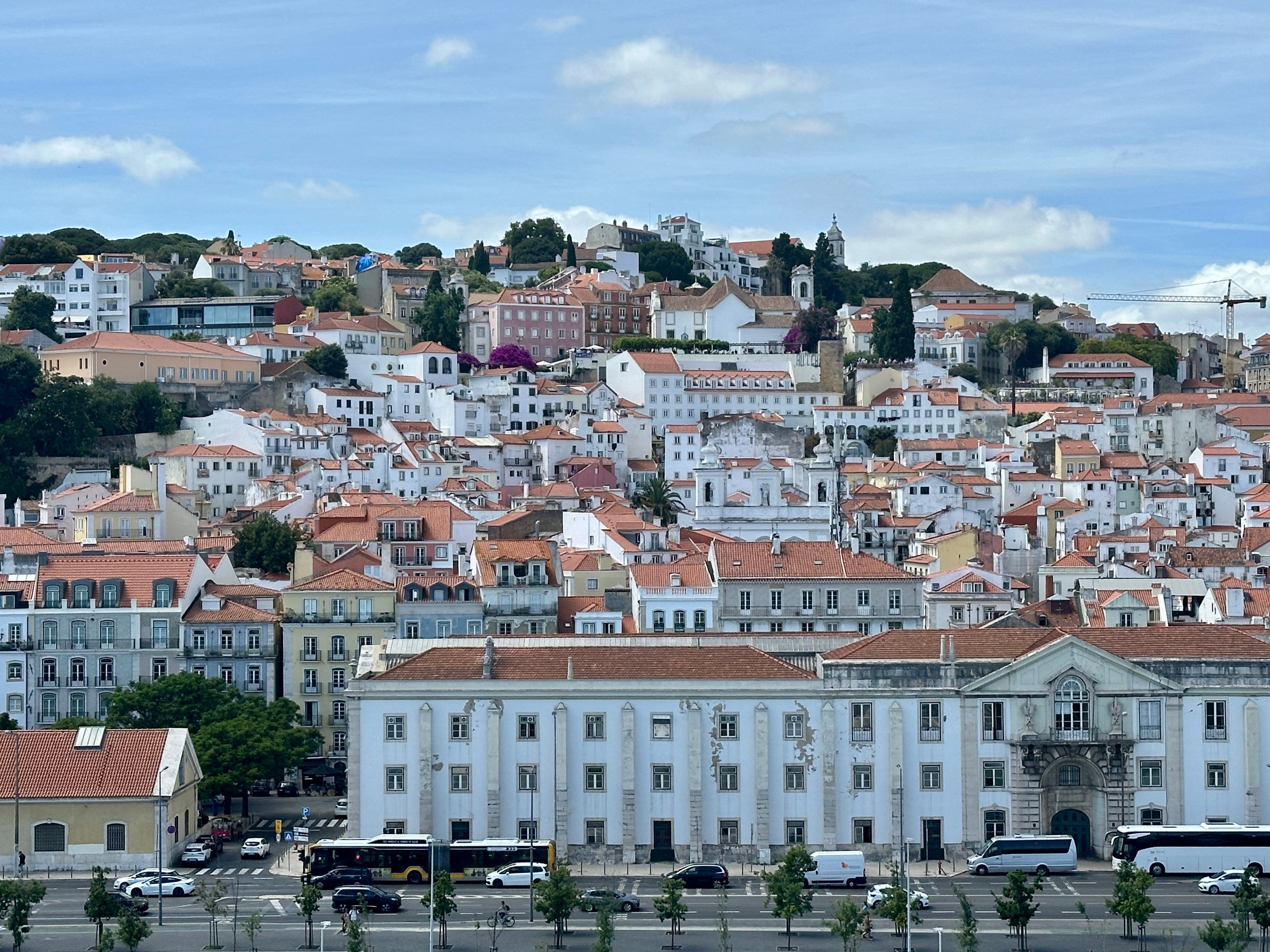
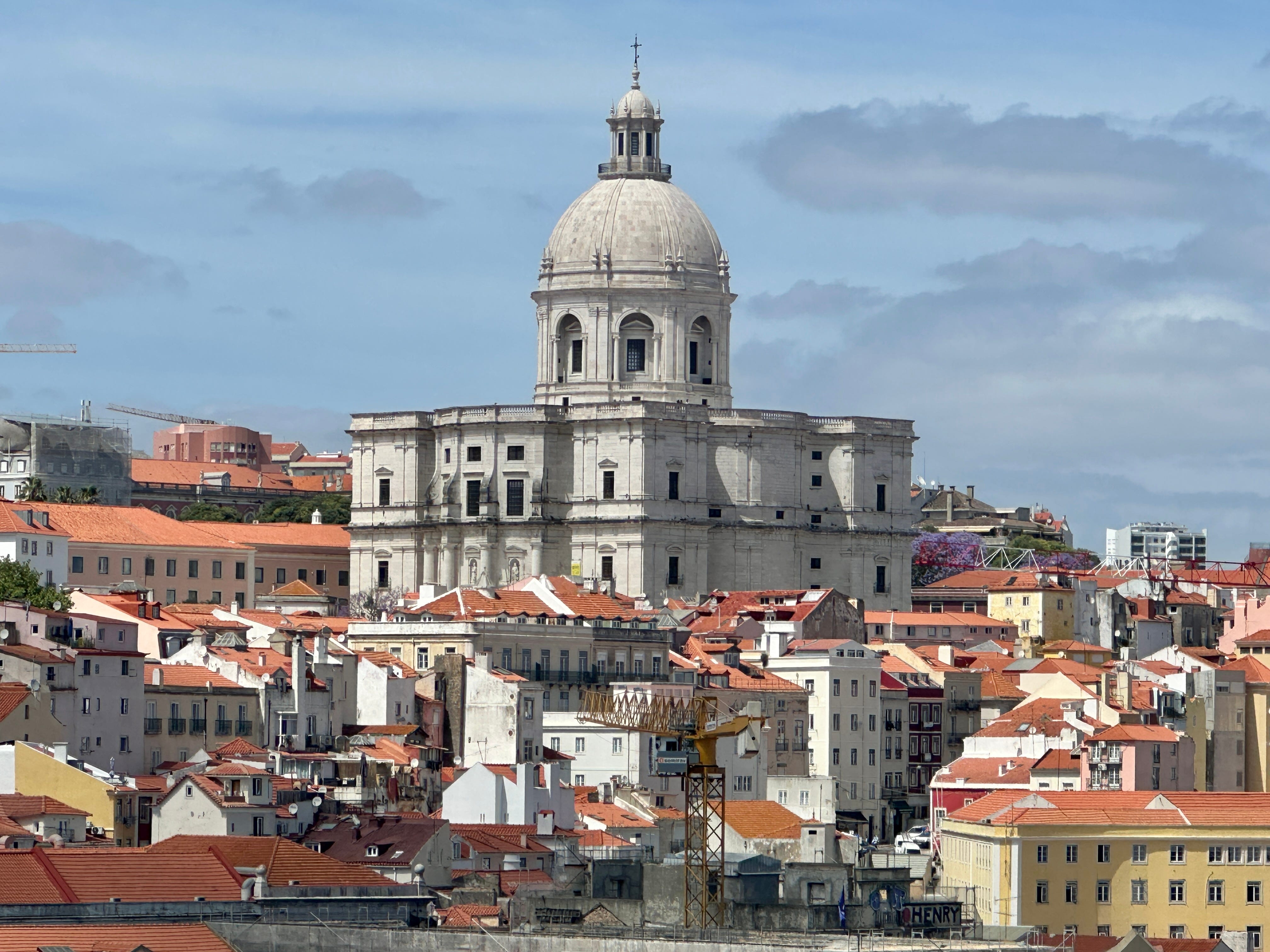
Before leaving Lisbon, we went to Deck 12 and took some photos of this beautiful city.
We had several hundred guests disembark here and just as many join us for the Lisbon to Miami segment - we will be making the most of our next 11 days on board the Mariner!
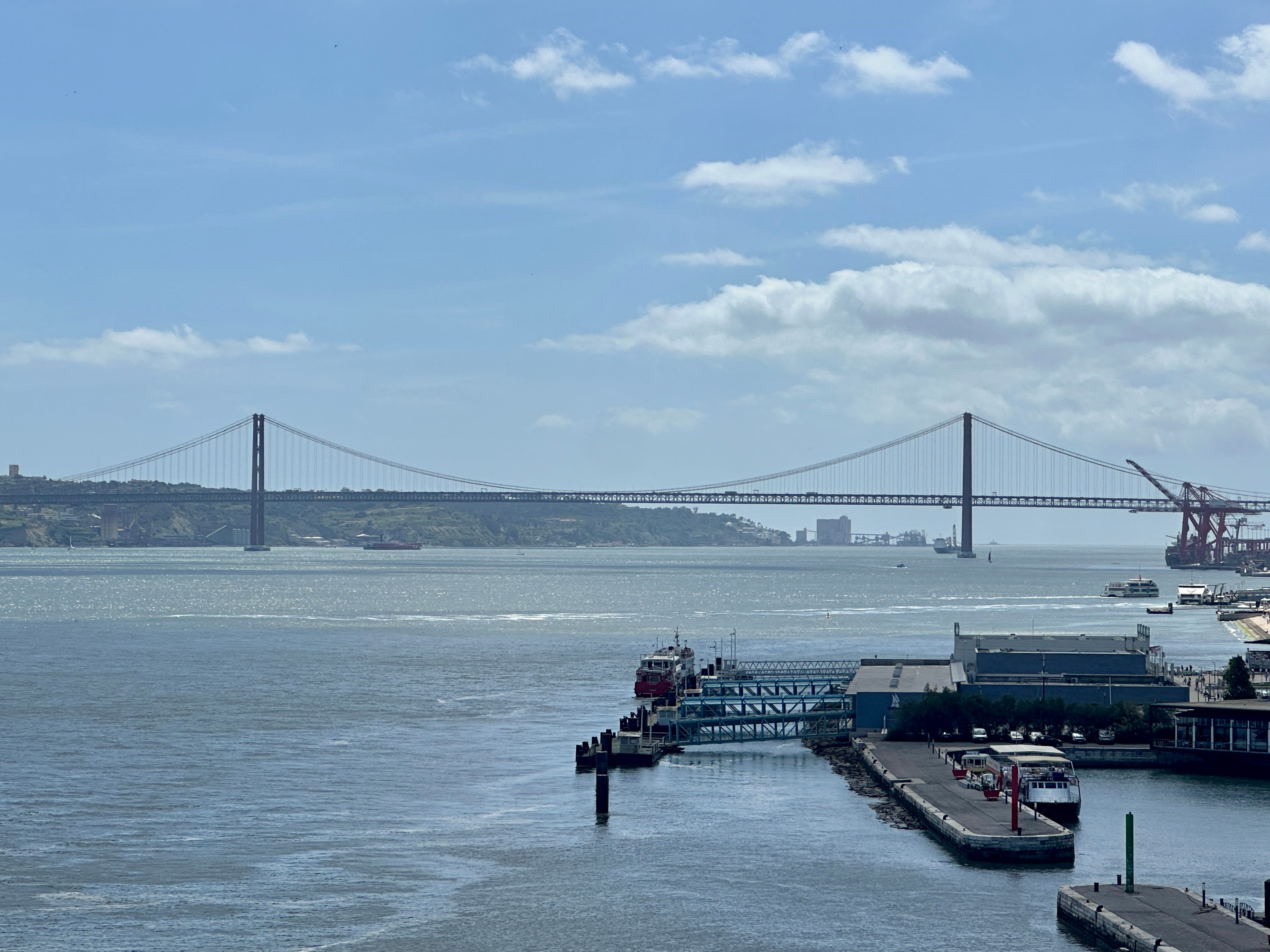
As we departed Lisbon on our way towards one of the islands in the Azores, we once again had lovely views of the 25 de Abril Bridge.
We will have several sea days before reaching our second to last port of call: Horta, Azores.
Having been to Portugal, I can safely say that your pictures reminded me why I loved that country so much, especially the Pastel de Nata and the wonderful Port.😉👍
Portugal will be on my list of countries to visit!